Leave Your Message
High-tolerance parts engineered specifically to optimize the performance of waste management and recycling machinery.
The global transition toward a circular economy has placed unprecedented demands on municipal solid waste (MSW) and industrial recycling operations. Modern material recovery facilities (MRFs), scrap metal processing plants, and waste management centers no longer rely on simple manual sorting. Instead, they employ massive, automated, high-throughput systems designed to process hundreds of tons of material daily. At the heart of these heavy-duty systems lies hydraulic power.
Hydraulic equipment parts are the critical components that generate, control, and transmit the massive forces required to compress, shred, lift, and sort waste. Whether it is a baler compacting thousands of plastic bottles into dense cubes, a shear cutting through structural steel, or a sanitation vehicle compacting garbage on its route, high-performance hydraulic systems are indispensable. The efficiency of these operations relies entirely on the durability and precision of individual hydraulic components, such as valve blocks, cylinders, cylinder heads, bases, and spherical bearings.
Equipment downtime in the waste management sector is extremely costly. A single component failure in a primary compactor or sorting system can cause immediate operational bottlenecks, leading to environmental compliance issues and significant financial losses. Selecting precision-engineered hydraulic parts is a strategic necessity to ensure continuous operations.
The global waste recycling equipment market is experiencing rapid growth, driven by stringent environmental laws, government mandates on recycling rates, and the rising cost of raw materials. According to recent market analysis, the demand for heavy recycling machinery—including industrial compactors, balers, shredders, and automated sorting screens—is projected to grow at a compound annual growth rate (CAGR) of over 6% in the coming years.
This commercial expansion has shifted the focus of equipment manufacturers (OEMs) and facility operators toward total cost of ownership (TCO) and system reliability. Historically, hydraulic components were treated as simple commodities. However, today’s high-throughput recycling plants operate under severe conditions that quickly expose the weaknesses of standard-grade components. The presence of abrasive dust, chemical leachate, moisture, and extreme temperature variations makes waste processing one of the most hostile environments for hydraulic machinery. Consequently, there is a growing market demand for premium, precision-machined hydraulic parts that offer superior wear resistance, optimized fluid dynamics, and extended service life.
To understand the necessity of high-precision hydraulic parts, it is essential to examine their specific roles across key applications within the waste management and recycling lifecycle:
Industrial balers and compactors are designed to reduce the volume of recyclable materials (such as cardboard, plastics, and non-ferrous metals) to facilitate efficient transport. These machines require massive, sustained linear force to compress springy and highly resilient materials.
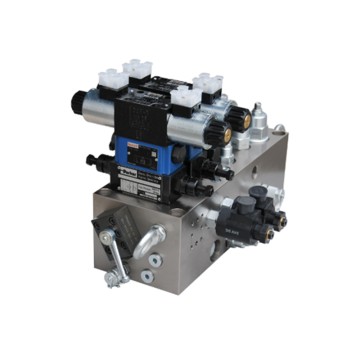
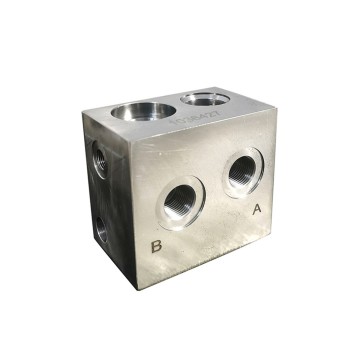
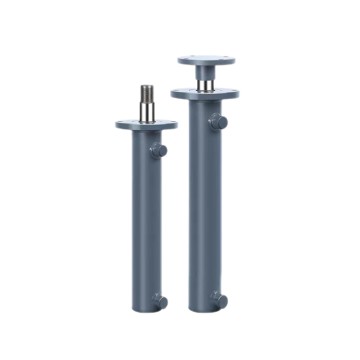
The hydraulic cylinder is the primary actuator responsible for this task. During the compression cycle, the Hydraulic Cylinder Base and Hydraulic Cylinder Head bear the brunt of the mechanical stress. If these parts are not manufactured with exact tolerances and high-strength materials, they can suffer structural fatigue or thread failure. Additionally, the Hydraulic Station Valve Block regulates the directional flow and pressure of the hydraulic oil, ensuring that the compaction ram extends and retracts smoothly and safely without pressure spikes.
Processing electronic waste, rubber tires, and scrap metal requires industrial shredders and shears that operate under extreme torque and shock loads. When a shredder blade encounters an un-shreddable object, the hydraulic system experiences sudden pressure spikes that can damage pumps and piping.
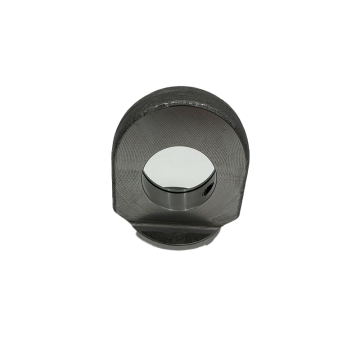
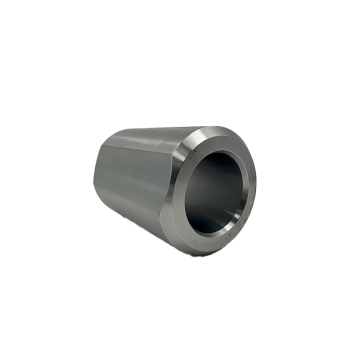
In these systems, specialized flow control valve blocks act as safety buffers, quickly redirecting fluid to protect the system. Furthermore, the high-vibration environment of shredders requires robust mechanical connections. Parts like the Hydraulic Spherical Bearing and Hydraulic Cylinder Bush are critical to absorbing multi-directional forces and maintaining cylinder alignment, preventing premature wear on the cylinder rod and seals.
Modern sorting facilities utilize automated star-screens, optical sorters, and robotic arms to separate paper, glass, plastics, and metals. These systems require rapid, repetitive movements. Hydraulic actuators used in sorting lines must deliver precise positioning and fast cycle times. Precision-machined valve blocks ensure immediate response times, allowing the system to maintain high sorting accuracy at maximum conveyor speeds.
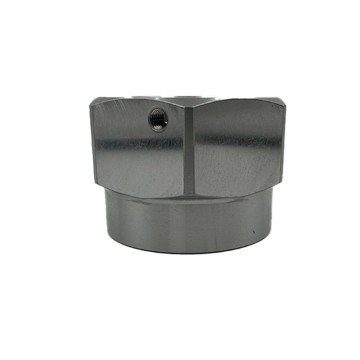
The waste management process begins on the streets. Municipal sanitation trucks rely on complex hydraulic circuits to operate bin lifters, hopper packers, and ejector panels. These mobile hydraulic systems face unique challenges, including exposure to road salt, weather extremes, and corrosive organic waste liquids (leachate). Cylinders used in these applications, such as sanitation vehicle locking cylinders and lifting cylinders, require specialized seals and robust components like the Hydraulic Cylinder Nut to prevent external contaminants from compromising the internal hydraulic fluid.
Micro Precision Machinery utilizes advanced CNC machining and rigorous surface treatments to ensure that every hydraulic part meets the exact dimensional tolerances and material hardness required to survive the abrasive and corrosive conditions of waste processing plants.
The integration of digital technology and the Internet of Things (IoT) is transforming traditional hydraulic machinery into smart, self-monitoring systems. Several key trends are defining the future of hydraulics in the waste management sector:
In high-pressure applications, even a microscopic deviation in component dimensions can lead to internal fluid bypass, pressure drop, or catastrophic seal failure. Micro Precision Machinery (MPM) addresses these challenges by manufacturing hydraulic equipment parts to the highest industry standards.
From the initial selection of high-tensile alloy steels to final ultrasonic testing, every step of the manufacturing process is optimized. MPM’s valve blocks feature clean internal passages to minimize fluid turbulence and heat generation, while our cylinder components, including heads, bases, and bushes, are machined to micrometer-level tolerances to ensure a perfect fit and long-term reliability.
A1: The most common causes of failure are fluid contamination from dust and debris, excessive heat generation due to restricted flow, and mechanical fatigue on cylinder bases and heads caused by continuous high-pressure cycles. Using precision-machined parts with tight tolerances and high-quality seals significantly mitigates these risks.
A2: Custom valve blocks optimize the internal routing of hydraulic fluid, reducing pressure drops, fluid turbulence, and heat generation. This results in faster cycle times for compactors and lower energy consumption for the entire hydraulic power unit.
A3: Waste compactors and collection vehicles often operate on uneven ground or handle unbalanced loads, causing minor misalignment. Spherical bearings allow the cylinder to pivot smoothly under load, preventing bending forces on the cylinder rod and reducing wear on internal seals.
Explore our complete range of precision-machined parts designed for heavy-duty industrial and mobile hydraulic applications.