Leave Your Message
0%

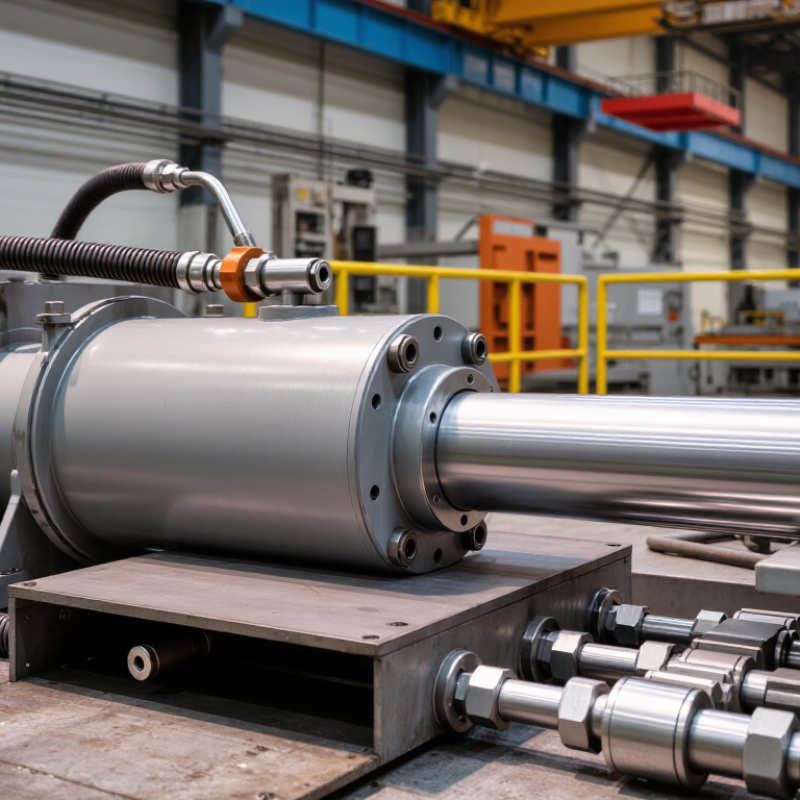
In demanding industrial environments, motion control must remain steady under heavy loads, dust, vibration, and repeated cycles. A Hydraulic Actuator converts pressurized fluid into controlled linear or rotary movement. This capability supports equipment such as presses, excavators, injection molding machines, lifting platforms, and automated production lines.

Engineers often choose a Hydraulic Actuator when compact size and high force are essential. Hydraulic systems can deliver substantial pushing power without requiring a large electric motor at every moving point. They also provide smooth movement, adjustable speed, and practical overload management when properly designed. On a factory floor, this may mean a press moving evenly instead of jolting through its stroke. It may also reduce mechanical stress on connected components.

However, hydraulic power is not automatically the best choice. It requires suitable pumps, hoses, seals, filtration, and regular inspection. Leaks can lower performance, create maintenance concerns, and contaminate working areas. Poorly selected fluid viscosity may also cause slow movement during cold starts. These details are easy to underestimate.

Real-world selection should begin with load requirements, stroke length, duty cycle, operating temperature, and available maintenance skills. Manufacturer specifications should be checked against application testing, not accepted blindly. Pressure ratings, mounting conditions, emergency stopping needs, and expected service life deserve equal attention. No actuator solves every problem. That limitation matters.

When correctly matched and maintained, a Hydraulic Actuator offers dependable force, controllable motion, and long-term value for Industrial Equipment. Its strongest advantage is not raw power alone, but practical performance under demanding operating conditions.
Why Choose a Hydraulic Actuator for Industrial Equipment?

What a Hydraulic Actuator Is and How It Works

Why Choose a Hydraulic Actuator for Industrial Equipment?

A hydraulic actuator converts pressurized fluid into controlled mechanical motion. A pump sends oil through a valve, while pressure pushes a piston inside a cylinder. The piston rod then produces linear force. Its working principle follows Pascal’s law: pressure applied to a confined fluid transfers throughout the fluid. Force depends on pressure and piston area, expressed as F = P × A. For example, a 100 mm piston at 160 bar can theoretically deliver about 126 kilonewtons. Real output is lower because seals, friction, leakage, and temperature reduce efficiency.

Hydraulic actuators suit presses, lifting platforms, injection equipment, and mobile machinery. They provide high force from compact cylinders and tolerate demanding duty cycles. Fortune Business Insights’ 2024 Hydraulic Equipment Market report valued the global market at approximately 49.09 billion US dollars in 2023. It projects growth to about 70.64 billion dollars by 2032. That expansion reflects continuing demand for force-dense motion systems, not automatic proof that hydraulics fit every machine.

Selection requires practical judgment. Engineers should check load, stroke, speed, oil cleanliness, duty cycle, and failure consequences. ISO 4413 emphasizes safe hydraulic-system design, including pressure control and energy isolation. In maintenance work, contamination often causes more trouble than insufficient actuator strength. That point is easy to underestimate. Hydraulic actuators can also waste energy when pumps run against unnecessary pressure. Proper valve sizing, filtration, cooling, and leak inspection matter. I would not choose one from force data alone; noise, heat, maintenance access, and control accuracy can change the decision.

Core Components of a Hydraulic Actuator System

Why Choose a Hydraulic Actuator for Industrial Equipment?

A hydraulic actuator system depends on coordinated components, not pressure alone. The reservoir stores clean fluid, while the pump converts mechanical power into flow. Valves then control direction, speed, and pressure. A filter protects tight clearances from abrasive particles. In practice, one neglected filter can shorten pump life and cause unstable motion.

The cylinder or motor creates useful force. A Rotary Hydraulic Actuator suits controlled turning, indexing, and compact rotary movement. Seals, bearings, hoses, and fittings complete the working circuit.

Engineers should size each part against load, duty cycle, temperature, and required response time. ISO 4413 stresses safe design, contamination control, and pressure management for hydraulic systems.

Industry demand also supports careful component selection. Allied Market Research valued the global hydraulic equipment market at about 49.2 billion dollars in 2022. Its report projects continued growth through 2032. Growth does not excuse waste. The U.S. Department of Energy notes that industrial fluid power systems can lose substantial energy through leakage, throttling, and poor maintenance. Exact losses vary widely. That uncertainty matters. Field measurements should replace assumptions. A slightly oversized pump may seem safer, yet it can increase heat, noise, and operating cost. Placement matters too. A hot reservoir beside a dusty press is an avoidable mistake.

Key Reasons to Use Hydraulic Actuators in Industry

Hydraulic actuators remain valuable in industrial equipment because they deliver high force from compact components. A cylinder can lift, clamp, press, or position heavy loads inside limited machine space. This suits injection molding machines, construction equipment, metal presses, and automated production lines. The U.S. Department of Energy reports that pumping systems may consume 25% to 50% of electricity in some industrial facilities. That figure makes system design critical, not optional.

Hydraulics also provide smooth force control under changing loads. Pressure can be adjusted through valves, while flow controls actuator speed. In a factory, this can create steady clamping pressure and reduce sudden mechanical shock. ISO 4413 emphasizes safe design, cleanliness, energy efficiency, and controlled fluid power systems. Field technicians know the practical difference: clean oil, correctly sized hoses, and regular filtration often prevent unstable movement and expensive downtime. Small details matter.

Hydraulic systems are not automatically efficient. Poorly matched pumps, leakage, heat buildup, and oversized valves can waste energy continuously. The U.S. Department of Energy’s pump-system guidance recommends measuring flow, pressure, operating hours, and control losses before modifying equipment. That approach is more reliable than choosing components by catalogue force alone. A quieter machine may still waste power. A faster cylinder may shorten seal life. Engineers should test actual load cycles, record temperature changes, and review maintenance data before approving a final actuator design.

Why Choose a Hydraulic Actuator for Industrial Equipment? - Key Reasons to Use Hydraulic Actuators in Industry

Evaluation Dimension Typical Hydraulic Actuator Capability Industrial Value Practical Consideration
Force Density Cylinder force is calculated as F = P × A. A 100 mm bore cylinder operating at 160 bar can theoretically produce approximately 126 kN on extension before losses. Delivers high linear force from a relatively compact actuator, making it suitable for presses, lifting systems, forming machines, and heavy material handling. Actual output depends on pressure, piston area, seal friction, efficiency, and system condition.
Operating Pressure Many industrial hydraulic systems operate in the approximate range of 70–350 bar, depending on equipment design and application requirements. Higher pressure allows the required force to be achieved with smaller cylinders and reduced mechanical footprint. Pressure ratings must match the cylinder, valves, hoses, fittings, and safety controls.
Motion Control Flow-Control Valves regulate actuator speed, while proportional and servo valves can provide controlled acceleration, deceleration, and positioning. Supports smooth movement, adjustable stroke speed, controlled force, and repeatable machine cycles. Precision depends on valve quality, feedback sensors, oil cleanliness, temperature stability, and control-system tuning.
Load Holding Hydraulic Circuits can hold a load using counterbalance valves, pilot-operated check valves, and other load-control devices. Useful for lifting platforms, injection equipment, Machine Tools, clamps, and applications where a load must remain supported. A cylinder should not be relied on as the sole safety support; mechanical blocking and correctly rated safety devices may be required.
Speed and Power Actuator speed is determined primarily by flow rate and piston area: v = Q ÷ A. The same system can provide high force at controlled speed or faster motion at lower force. Provides flexible speed-force combinations for pressing, clamping, lifting, cutting, and positioning operations. Pump capacity, line sizing, valve flow rating, and heat generation limit continuous operating performance.
Shock and Overload Tolerance Pressure-relief valves can limit peak system pressure and help protect components during overload or impact conditions. Improves protection for equipment exposed to variable loads, sudden resistance, or intermittent impact. Relief valves reduce risk but do not eliminate structural, fatigue, or hydraulic shock hazards.
Installation Flexibility Power can be transmitted through hoses and rigid piping, allowing the power unit and actuator to be located separately. Helps integrate actuation into machines with restricted space, multiple axes, or remote power-unit locations. Hose routing, bend radius, vibration, accessibility, and leak prevention must be considered during design.
Duty-Cycle Suitability Hydraulic actuators can support intermittent or continuous industrial duty when the pump, reservoir, cooling, filtration, and actuator are correctly sized. Suitable for repetitive production equipment and high-load applications requiring sustained power transmission. Continuous operation may require heat exchangers, adequate oil volume, filtration, and routine condition monitoring.
Environmental Adaptability Rugged cylinders can be configured with protective coatings, seals, rods, and mounting arrangements for demanding industrial environments. Works well in applications involving dust, vibration, outdoor exposure, heavy loads, and difficult mechanical conditions. Seal materials, rod protection, fluid compatibility, temperature range, and corrosion resistance must be selected for the environment.
Maintenance Requirements Regular inspection commonly includes fluid level, filtration, leakage, hose condition, pressure, temperature, alignment, and seal wear. A structured maintenance program helps preserve force output, motion consistency, component life, and operational safety. Poor cleanliness is a major cause of hydraulic component wear; filtration and contamination control are essential.
Best-Fit Applications Common applications include presses, lifts, injection-molding equipment, machine tools, mobile industrial machinery, clamps, gates, and heavy-duty material handling. Provides a strong combination of force, controllability, compact design, and overload protection. Electric or pneumatic actuation may be preferable where extremely clean operation, very high positioning precision, low maintenance, or low installed power is the primary requirement.

Note: Values shown are representative engineering ranges and examples. Final actuator selection should be based on the required force, stroke, speed, duty cycle, operating environment, safety requirements, and applicable standards.

Performance Factors That Affect Actuator Selection

Why Choose a Hydraulic Actuator for Industrial Equipment?

Performance Factors That Affect Actuator Selection

Selecting a hydraulic actuator requires more than checking its rated force. The application determines pressure, speed, stroke length, and operating cycle. A cylinder may deliver high force, yet respond poorly under unstable flow. That difference becomes visible when a conveyor starts repeatedly with a heavy load. The actuator must match the pump, valve, and control system. Otherwise, energy turns into heat, noise, and unnecessary wear.

Load direction also matters. Side loading can damage seals and shorten rod life. Proper mounting keeps force aligned with the actuator’s centerline. For compact rotary movement, a Vane Actuator may offer smooth positioning and simple integration. However, its torque capacity and rotation range need careful verification. Bigger is not always better. Oversizing can reduce control accuracy and increase operating costs.

Environmental conditions often change the decision. Dust, moisture, temperature swings, and corrosive fluids affect sealing materials and service intervals. Duty cycle deserves equal attention. An actuator used every few seconds faces different demands than one moving twice daily. In practical assessments, engineers should measure actual load behavior, not rely only on catalog estimates. A common selection mistake is ignoring pressure spikes. I have seen apparently suitable systems perform poorly because peak loads were never recorded. Testing under realistic conditions may reveal weaknesses early. Even experienced teams sometimes underestimate maintenance access. That oversight deserves another review.

Why Choose a Hydraulic Actuator for Industrial Equipment?

Theoretical push force increases directly with hydraulic pressure. This relationship helps engineers evaluate pressure requirements, cylinder size, load capacity, operating speed, duty cycle, and safety margins during actuator selection.

Representative calculation for a 100 mm bore cylinder: Force = Pressure × Piston Area. Values show ideal theoretical push force and exclude friction, seal losses, pressure drops, and mounting effects.

Hydraulic Actuators Compared with Electric and Pneumatic Systems

Hydraulic actuators suit industrial equipment that must move heavy loads with controlled force. In field inspections, they often perform reliably under shock loads and demanding duty cycles. A compact cylinder can deliver substantial pushing power at 200 bar. This matters in presses, lifting platforms, injection equipment, and mobile machinery.

Electric actuators offer cleaner operation and precise positioning. They usually simplify maintenance because they need no oil lines or pumps. However, large electric systems may require expensive motors, drives, and thermal management. Their performance can also decline during repeated high-force cycles.

Pneumatic actuators are simpler and fast. They work well for light, repetitive movements. Yet compressed air is less rigid than hydraulic fluid, making accurate force control more difficult. Air leaks also waste energy quietly.

Hydraulic systems are not automatically the best choice. They need filtration, hose inspection, leak prevention, and temperature control. Poor maintenance can turn a powerful machine into an unreliable one.

I have seen oversized pumps consume energy without improving production. That mistake is easy to repeat.

Engineers should compare peak force, speed, duty cycle, noise limits, accuracy, and available maintenance skills. A well-sized hydraulic actuator can provide smooth force in a harsh environment, but only when the complete circuit is designed carefully. Practical testing under real load remains essential.

Industrial Applications and Operating Environments

Hydraulic actuators suit industrial equipment because they deliver high force from compact assemblies. In excavators, lifting platforms, presses, and material-handling systems, this force supports controlled movement under heavy loads. A Tilt Actuator can adjust a bucket, platform, or machine attachment with steady positioning. Operators often notice the difference during slow, precise movements.

Industrial environments can be harsh. Dust enters around moving joints, while water reaches equipment during washdown. Foundries add radiant heat, and outdoor machinery faces freezing mornings and sudden temperature changes. Proper seal selection, protected hoses, and clean hydraulic fluid help maintain dependable operation. In field inspections, small leaks often appear before serious performance loss. They should not be ignored.

Maintenance still matters. No actuator is perfect. Side loading, poor alignment, and contaminated fluid can shorten service life, even when the cylinder is correctly rated. Engineers should match pressure, stroke length, mounting design, and duty cycle to the actual application. A marine system may require stronger corrosion protection, while a warehouse lift may need quiet and repeatable control. Real operating data is valuable. However, early calculations can miss unexpected shock loads or operator habits. Regular inspection, measured pressure checks, and documented repairs make hydraulic systems more reliable over time.

Maintenance, Safety, and Service Life Considerations

A hydraulic actuator suits industrial equipment when high force, compact installation, and controlled movement matter. An Angled Actuator can fit around frames, guarding, or restricted mounting areas. Its value, however, depends heavily on maintenance discipline. Clean oil matters. Contamination can score valves, damage seals, and create slow, uneven movement. ISO 4413 recommends controlling hydraulic-system risks through filtration, pressure relief, isolation, and documented maintenance procedures.

Safety begins before anyone removes a hose. OSHA’s Control of Hazardous Energy guidance estimates that effective lockout/tagout can prevent about 120 deaths and 50,000 injuries annually. Technicians should isolate electrical and hydraulic energy, block raised loads, and release trapped pressure. A gauge reading of zero is useful, but it is not perfect proof. Physical restraints and a controlled test remain necessary.

Service life is usually lost gradually. A small leak wets the rod, dust sticks to it, and the seal wears faster. Operators should record cycle counts, oil temperature, drift, leakage, and unusual noise. The Hydraulic Institute’s life-cycle guidance also supports condition-based maintenance instead of relying only on calendar intervals. That approach can reduce unnecessary part replacement, though it requires reliable records and trained inspection. Some assumptions fail in harsh environments. Heat, side loading, water ingress, and poor alignment may shorten life sharply, even when the actuator appears correctly sized.

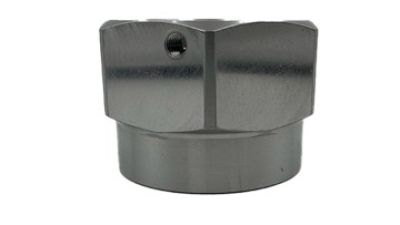
Hydraulic Cylinder Nut MPM-HCNT11: Key Features, Applications, and Selection Guide

Hydraulic Cylinder Nut MPM-HCNT11 is a precision fastening component designed for demanding hydraulic applications. Made from high-strength alloy steel through precision forging, it combines excellent tensile strength with reliable dimensional stability. Heat treatment enhances its load-bearing performance, while an anti-corrosion surface finish helps protect the nut in humid, dusty, or high-pressure working environments. Its ISO 6H-grade thread precision supports smooth installation and dependable engagement with compatible cylinder components.

A special locking structure helps resist loosening caused by vibration, pressure fluctuations, and repeated cylinder movement. This design also supports secure end-cover fixation, reducing the risk of leakage during continuous operation. The nut is suitable for construction machinery, injection molding machines, hydraulic supports, industrial equipment, and other systems that require stable cylinder assembly under demanding conditions.

When selecting the appropriate specification, users should confirm the cylinder thread size, pitch, installation space, and operating load. Metric and imperial versions are available, with customized dimensions or surface treatments offered for specific equipment requirements. Matching the nut accurately with the cylinder assembly improves installation efficiency, maintenance reliability, and long-term system performance.

FAQS

What does a hydraulic actuator do?

It converts pressurized fluid into controlled mechanical motion. A pump sends oil through a valve. Pressure pushes a piston inside a cylinder. The piston rod then creates linear force.

How does a hydraulic actuator generate force?

It follows Pascal’s law. Pressure spreads through confined fluid. Force equals pressure multiplied by piston area. For example, a 100-millimeter piston at 160 bar can theoretically produce about 126 kilonewtons. Actual force is lower. Friction, seals, leakage, and heat reduce output.

Why are hydraulic actuators useful in industrial equipment?

They provide strong force from compact cylinders. They suit presses, lifting platforms, injection equipment, and mobile machinery. They can handle demanding duty cycles. They also support controlled movement under heavy loads. Still, compact size does not guarantee the best choice.

What should engineers check before selecting an actuator?

Check load, stroke, speed, oil cleanliness, and duty cycle. Consider heat, noise, maintenance access, and control accuracy. Review what happens if the actuator fails. Pressure data alone can mislead. The machine’s surroundings matter too.

Can a hydraulic actuator fit in a restricted space?

Yes, certain angled designs can fit around frames and guards. They may work where straight mounting is difficult. Measure clearance around the cylinder and rod. Leave room for hoses and service access. A tight fit may complicate maintenance later.

What maintenance problems commonly affect hydraulic actuators?

Dirty oil can score valves and damage seals. It may cause slow or uneven movement. Small leaks can wet the rod and attract dust. That dust accelerates seal wear. Cleanliness is easy to underestimate.

How can technicians work safely around hydraulic actuators?

Isolate electrical and hydraulic energy before removing a hose. Block raised loads with physical restraints. Release trapped pressure carefully. A zero gauge reading helps, but it is not perfect proof. Perform a controlled test before service begins.

How can operators extend actuator service life?

Record cycle counts, oil temperature, leakage, drift, and unusual noise. Use filtration and inspect seals regularly. Check alignment and side loading. Watch for water entering the system. Calendar-based servicing may miss gradual damage. Reliable records are necessary.

Conclusion

A Hydraulic Actuator converts pressurized fluid into controlled linear motion, making it a powerful solution for industrial equipment. Its main system components typically include a cylinder, piston, hydraulic pump, reservoir, valves, hoses, and control elements. Together, these parts regulate force, speed, direction, and positioning. Hydraulic actuators are valued for their high force density, smooth movement, reliable load handling, and ability to operate under demanding conditions. Selection should consider required force, stroke length, operating speed, pressure, temperature, duty cycle, mounting arrangement, and control accuracy.

Compared with electric and pneumatic systems, hydraulic actuators are often preferred for heavy-duty applications where compact size and substantial power are important. They are commonly used in material handling, construction equipment, manufacturing machinery, agriculture, and process systems. Proper maintenance, including fluid inspection, seal replacement, filtration, leak prevention, and connection checks, supports efficiency and service life. Safe operation also requires pressure control, suitable guarding, regular inspections, and trained personnel.

Clara

Clara

Clara is a seasoned marketing professional at Qingdao Micro Precision Machinery Co., Ltd., a leading global manufacturer of high-performance hydraulic systems, precision mechanical parts, and compact mechanical equipment such as mini excavators and forklifts. Since joining the company, she has......
Previous China Top Cylinder Piston Rod Suppliers for Global Buyers