Leave Your Message
These days, buyers all over the world aren’t just chasing horsepower when they pick a Mini Excavator. Honestly, what they really care about is being able to get into tight spots, dig without the machine feeling unstable, haul it from one job to the next without a ton of hassle, and know that after-sales support will actually be there when they need it. I mean, a machine working right beside a garden wall is dealing with a very different set of demands than one digging a trench through hard, packed city soil.
So, Grand View Research says the global Mini Excavator market keeps growing. Why? Mostly because of urban construction, utility upgrades, landscaping, and rental demand. Fortune Business Insights also points to compact equipment as a construction segment that's on the rise. Now, their market boundaries aren't exactly the same. And honestly, that detail matters. Forecasts can be helpful, sure, but they're not promises.
As Mike Fitzgerald, an industry specialist over at Equipment World, puts it: “A mini excavator isn’t just a smaller machine—it’s a whole different way of working.” And honestly, that lines up with what you see in the field. A lot of operators tend to care more about visibility, smooth hydraulics, and how well attachments respond than about getting every last inch of digging depth.
So, if you're buying a mini excavator from overseas, this guide walks you through ten different types. We're talking zero-tail-swing models, the usual compact machines, electric ones, rubber-track excavators, wheeled versions, and some pretty specialized setups. Honestly, each one suits a different kind of jobsite—what works on one site might not make sense on another.
A lot of buyers get hung up on the sticker price. Honestly? That can end up costing you big time. What really drives the true cost of a machine over its life is stuff like fuel use, how wide it is to transport, whether service can get to it, parts availability, and operator training. A 1.8-ton excavator might squeeze into a narrow backyard, sure. But step up to a 6-ton model and you'll get much stronger breakout force—great for roadwork and drainage.
Look, that ranking isn't set in stone. Local soil, climate, what your dealer can actually do, and regulations can all shift the outcome. So treat this overview as a handy starting point—then double-check the specs with manufacturers and regional distributors. Mistakes happen, sure. But more often than not, good decisions start with honest comparisons.
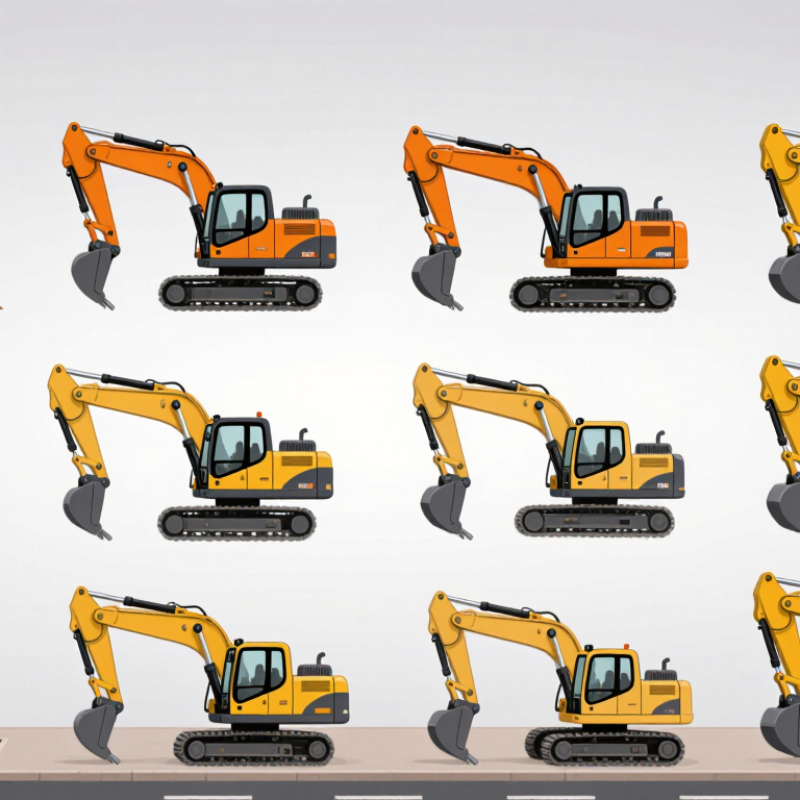
Top 10 Types of Mini Excavators for Global Buyers
Mini excavator classification is not globally uniform. ISO 6015 measures operating mass with specified equipment, helping buyers compare machines fairly. Industry reports from Off-Highway Research also segment excavators by operating class, region, and application. The mini category commonly includes micro, compact, zero-tail-swing, short-tail-swing, conventional-tail, crawler, wheeled, long-reach, amphibious, and hybrid excavators.
Operating weight remains the clearest starting point. Micro excavators often suit narrow alleys, while compact crawler models handle landscaping and utility work. Zero-tail machines rotate within their track width, reducing wall and traffic risks. Wheeled versions move faster on paved sites. Long-reach and amphibious designs serve specialized excavation, although they should not be treated as ordinary site machines.
Engine power, digging depth, bucket capacity, transport width, and undercarriage design create more reliable comparisons. The 2024 Construction Equipment Guide market review highlights growing demand for compact equipment in urban renovation and utility projects. However, market definitions still vary between regions. Some sellers classify machines below six tonnes as mini excavators; others use narrower limits. That inconsistency can mislead procurement teams. It deserves attention.
Buyers should record operating weight, tail radius, maximum reach, ground pressure, and attachment flow. A 2023 industry analysis by Research and Markets also identifies rental fleets and infrastructure maintenance as major demand drivers. Field experience suggests a practical lesson: the smallest machine is not always the most efficient. Poor hydraulic matching can waste fuel, time, and operator effort.
| No. | Mini Excavator Type | Key Definition and Classification Criterion | Typical Operating Mass | Typical Overall Width | Typical Maximum Digging Depth | Main Configuration | Typical Applications | Global Buyer Considerations |
|---|---|---|---|---|---|---|---|---|
| 1 | Micro or Ultra-Compact Mini Excavator | The smallest excavator class, generally selected for restricted-access work and low ground-impact requirements. | Below 1.5 tonnes | Approximately 0.70–1.30 m | Approximately 1.5–2.5 m | Rubber tracks; compact boom and dipper arm | Residential landscaping, narrow passages, utility repairs, indoor demolition | Check transport width, lifting points, attachment availability, and local trailer regulations. |
| 2 | Compact Mini Excavator | A light-duty class balancing compact dimensions with greater breakout force and digging performance than micro machines. | 1.5–3 tonnes | Approximately 1.00–1.55 m | Approximately 2.2–3.2 m | Rubber tracks; boom swing often available | Drainage, cable installation, small foundations, landscaping, general rental work | A common international rental category; compare hydraulic flow and attachment compatibility. |
| 3 | Standard Mini Excavator | The widely used mid-range mini excavator class for general construction and infrastructure work. | 3–6 tonnes | Approximately 1.50–2.00 m | Approximately 3.0–4.0 m | Rubber or steel tracks; enclosed or open operator station | Site preparation, trenching, road maintenance, foundation work, material handling | Evaluate rated lift capacity, transport mass, emissions compliance, and service access. |
| 4 | Heavy Mini Excavator | The upper end of the mini excavator segment, providing higher digging force while remaining smaller than conventional excavators. | 6–10 tonnes | Approximately 1.90–2.35 m | Approximately 3.8–5.0 m | Tracked undercarriage; higher-capacity hydraulic system | Deep trenching, heavier excavation, demolition preparation, commercial site work | Confirm whether local regulations classify the machine as a mini or conventional excavator. |
| 5 | Zero-Tail-Swing Mini Excavator | Designed so the rear counterweight stays within, or nearly within, the track width during rotation. | Typically 1.5–6 tonnes | Approximately 1.00–2.00 m | Approximately 2.3–4.0 m | Reduced rear overhang; often includes independent boom swing | Urban construction, roadside utilities, work beside walls, confined commercial sites | Measure the complete working envelope, including boom swing and counterweight clearance. |
| 6 | Short-Radius or Reduced-Tail-Swing Mini Excavator | Uses a shortened rear swing radius to operate near obstacles, although some counterweight may extend beyond the tracks. | Typically 3–10 tonnes | Approximately 1.60–2.35 m | Approximately 3.0–5.0 m | Short rear radius; counterweight geometry optimized for restricted sites | Street work, bridge maintenance, foundation excavation, work beside buildings | Compare rated lift capacity with a conventional-tail model of similar operating mass. |
| 7 | Battery-Electric Mini Excavator | A mini excavator powered by a rechargeable battery and electric motors instead of a diesel engine. | Typically 1.5–6 tonnes | Approximately 1.00–2.00 m | Approximately 2.3–4.0 m | Battery pack, electric drive motor, onboard or external charging | Indoor work, low-emission zones, noise-sensitive projects, utility and renovation work | Check battery capacity, charging voltage, charge time, operating temperature, and recycling rules. |
| 8 | Wheeled Mini Excavator | A compact excavator mounted on wheels rather than continuous tracks for improved road travel and mobility. | Typically 3–10 tonnes | Approximately 1.80–2.50 m | Approximately 3.0–5.0 m | Rubber tires; optional stabilizers, dozer blade, or road equipment | Urban utility work, roadside maintenance, municipal projects, paved-surface operations | Verify road registration, axle load, travel-speed limits, tire specification, and braking requirements. |
| 9 | Long-Reach Mini Excavator | Configured with an extended boom or dipper arm to increase horizontal reach and excavation depth. | Typically 3–10 tonnes | Approximately 1.50–2.35 m | Approximately 4.0–7.0 m, depending on configuration | Extended boom or arm; reduced bucket capacity is common | Canal maintenance, slope work, pond cleaning, bank shaping, material removal | Assess reduced lifting capacity, transport height, stability, and attachment weight limits. |
| 10 | Amphibious or Low-Ground-Pressure Mini Excavator | Adapted for soft, wet, or unstable terrain through flotation pontoons, wide tracks, or other low-ground-pressure equipment. | Typically 3–10 tonnes, including equipment | Approximately 2.00–3.50 m | Approximately 3.0–5.0 m | Wide tracks, pontoons, flotation modules, or specialized undercarriage | Wetland restoration, drainage channels, shoreline work, flood-control maintenance | Confirm flotation, water-depth limits, transport dismantling requirements, and regional safety regulations. |
Note: Operating-mass, width, and digging-depth ranges are typical international classification references rather than universal legal standards. Actual specifications vary by configuration, counterweight, track width, boom arrangement, attachments, and regional regulations.
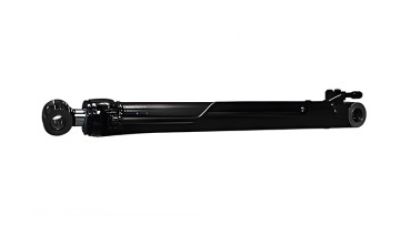
The MPM-HCB101 bucket cylinder is a critical Hydraulic Actuator for excavators and loaders, controlling the bucket’s opening and closing with precise piston-rod movement. By converting hydraulic pressure into controlled extension and retraction, it supports essential operations such as digging, lifting, transporting, and unloading materials. Stable cylinder performance helps operators maintain smooth bucket positioning, especially when handling uneven loads or working in confined areas.
Before installation, verify that the cylinder’s mounting dimensions, pin diameter, port configuration, stroke length, and operating pressure match the machine’s original specifications. Correct fitment is essential for maintaining bucket alignment and preventing excessive stress on the linkage, pins, and hydraulic system. The mounting area should be cleaned carefully, and all connection points should be checked for damage, distortion, or abnormal wear before the cylinder is installed.
Regular maintenance can extend service life and reduce unexpected downtime. Inspect the piston rod for scratches, rust, bending, or oil residue, and examine seals, hoses, and fittings for leakage. Keep the rod and surrounding components clean, lubricate pivot points according to the equipment schedule, and avoid operating beyond the machine’s rated capacity. If movement becomes slow, uneven, or noisy, check the hydraulic fluid level and system pressure, then have worn seals or damaged components serviced promptly.
Operating weight is the clearest starting point. Definitions vary between regions. Some markets include machines below six tonnes. Others use narrower limits. Always compare weight, power, reach, and bucket capacity.
A micro or zero-tail-swing excavator often fits narrow spaces. One-ton machines may pass through a garden gate. Zero-tail designs rotate within their track width. Measure the entrance before ordering. Small errors become expensive.
Conventional models suit housing, utility work, landscaping, and light roadwork. They can dig trenches, move soil, and backfill. A 1.5-to-3.5-ton class often fits small construction sites. Compact does not mean weak.
Crawler machines provide stable movement on soil and uneven ground. Rubber tracks help protect finished surfaces. Steel tracks resist rough terrain better. Wet clay can quickly fill the track frame. I underestimated that once.
Wheeled excavators move faster on paved sites. They suit road maintenance and urban utility work. Their mobility can reduce transport time. Ground conditions still matter. Speed alone does not guarantee productivity.
Compare operating weight, digging depth, tail radius, reach, and hydraulic flow. Also check ground pressure and attachment compatibility. Engine power matters, but hydraulic matching matters more. Poor matching wastes fuel and operator effort.
Breakers, augers, grading tools, and brush cutters require suitable hydraulic flow. Confirm flow rates before purchasing attachments. Check cylinder seals, rod protection, and replacement access. A small leak can stop work quickly.
Check filter access, parts availability, service intervals, and local technical support. Ask for documented lifting limits and emissions compliance. Test emergency stops and attachment changes. Brochure figures can mislead. Real soil tells more.
This guide explains the main Mini Excavator types available to global buyers and the practical differences that affect machine selection. It covers micro and compact models for urban, indoor, and narrow-access projects; zero-tail-swing and short-tail designs for confined worksites; and conventional models suited to general construction, trenching, and material handling. It also introduces long-reach, telescopic, and high-performance configurations for demanding excavation tasks where greater reach, lifting capacity, or working depth is required.
Specialized Mini Excavator options can support agriculture, landscaping, road maintenance, and utility installation, with attachments and machine dimensions adapted to specific applications. To compare equipment effectively, buyers should consider operating weight, engine power, digging depth, arm reach, hydraulic flow, tail-swing radius, transport requirements, operator comfort, maintenance access, and local working conditions. A clear understanding of site limitations and project goals helps buyers choose a reliable, efficient, and cost-effective excavator type for different markets and applications.