Leave Your Message
Picking out an Excavator Cylinder supplier isn't just about finding the lowest price, you know? For buyers around the globe, it’s essential to look beyond just costs — things like load capacity, bore size, rod strength, seal quality, surface finish, and how reliable their delivery support really is. I mean, a cylinder might look pretty good on paper, but in muddy quarry conditions, it could fail pretty quickly. That’s where real-world experience comes into play.
Dr. Monika Ivantysyn, a hydraulic expert, once shared a handy rule of thumb: “You can't judge component performance in isolation — it’s all about how it fits into the entire hydraulic system.” And honestly, that’s spot on for excavator cylinders. They don’t work alone — they’re part of a system that includes pumps, valves, hoses, the quality of the oil, and even how the operator uses it. Overlooking any of these details can lead to leaks, won’t move smoothly, or worse — cause costly downtime.
In this guide, we’re taking a look at ten big-name manufacturers that serve international construction markets. We’ll cover their production capabilities, customization options, testing procedures, warranties, and how solid their after-sales support really is. The list includes Bosch Rexroth, Caterpillar, Komatsu, Hitachi Construction Machinery, Hyundai Construction Equipment, SANY, XCMG, Parker Hannifin, KYB, and Nabtesco. Keep in mind, these guys each have their own strengths — some mainly produce OEM parts, while others focus on aftermarket replacements or tailored Hydraulic Solutions.
When choosing, it’s smart to compare actual working pressure, retracted lengths, how the mountings fit, and seal compatibility. Don’t just take their word for it — ask for test records, not just their catalog specs. Also, get a sense of how easy it will be to find Spare Parts locally. Remember, what works well in mining or demolition sites might be totally different from agriculture or general construction needs. There’s no perfect ranking — sometimes, local service and support matter way more than the brand name itself. And going for the cheapest option could turn out to be pricey if replacement seals take forever to arrive.
This overview aims to help you navigate your options better. By setting realistic expectations and digging a little deeper, you can avoid surprises and make smarter choices when it comes to excavator cylinders.
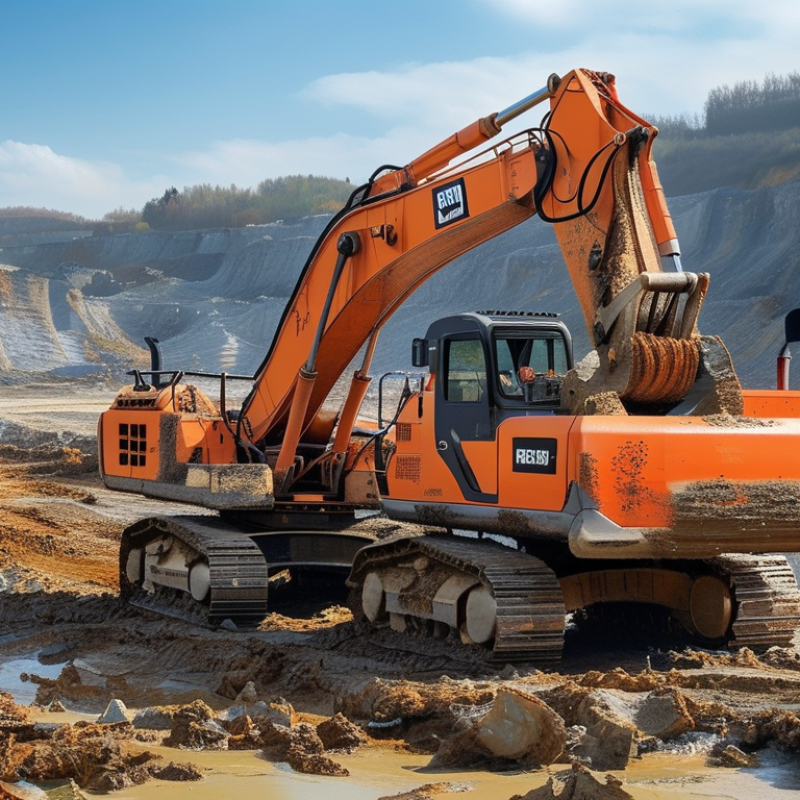
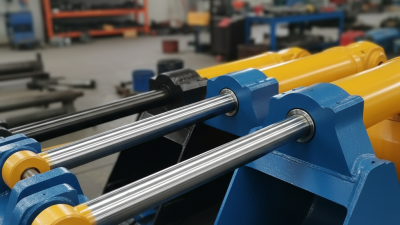
An excavator cylinder converts Hydraulic Pressure into controlled movement. It raises the boom, curls the bucket, and adjusts the stick. Inside, pressurized oil pushes a piston through a steel barrel. Seals prevent leakage, while the rod transfers force to the attachment. Small defects matter. A scratched rod can damage seals within hours. Contaminated oil can create uneven movement and internal wear.
Grand View Research valued the global Hydraulic Cylinders market at approximately USD 15.6 billion in 2023. Its report also forecasts continued growth through 2030, supported by construction and material-handling demand. This wider market data explains why cylinder quality deserves careful attention. However, market growth does not guarantee reliable performance. In field inspections, alignment, pin wear, and oil cleanliness often matter as much as the cylinder itself. A strong component can still fail when installation is careless. That is easy to overlook.
Tips: Match bore diameter, rod diameter, stroke length, and mounting points with the machine manual. Check rod chrome for pitting before purchase. Ask for pressure-test records and seal specifications. For searches involving a Bucket Stick Cylinder For Excavator Cylinder, confirm whether the wording describes the complete assembly or only one replacement part. The terminology can be confusing. Measure twice. A small mismatch may cause side loading, slower cycles, or premature seal failure.
A brand-neutral buyer reference for comparing excavator-cylinder manufacturing capabilities. The technical ranges below represent commonly specified values for hydraulic excavators and should be confirmed against the machine model, duty cycle, and hydraulic-system requirements.
| No. | Cylinder Application | Typical Excavator Class | Typical Bore | Typical Rod Diameter | Typical Stroke | Common Working Pressure | Key Manufacturing and Buyer Checkpoints |
|---|---|---|---|---|---|---|---|
| 1 | Boom Cylinder | Mini and compact excavators | 45–80 mm | 25–45 mm | 350–700 mm | 180–250 bar | Confirm compact packaging, pin alignment, mounting width, corrosion protection, and compatibility with the machine’s hydraulic circuit. |
| 2 | Arm or Stick Cylinder | Mini and compact excavators | 45–75 mm | 25–40 mm | 300–650 mm | 180–250 bar | Check retracted length, rod-end geometry, seal performance, and resistance to side loading during digging and grading. |
| 3 | Bucket Cylinder | Mini to medium excavators | 50–100 mm | 30–60 mm | 300–800 mm | 200–300 bar | Evaluate breakout-force requirements, rod surface hardness, spherical bearing fit, and protection from abrasive soil and debris. |
| 4 | Boom Cylinder | Medium excavators | 90–150 mm | 55–95 mm | 700–1,300 mm | 250–350 bar | Look for controlled welding, honed tube accuracy, tested cushioning, high-strength mounting eyes, and documented pressure testing. |
| 5 | Arm or Stick Cylinder | Medium excavators | 90–140 mm | 55–90 mm | 700–1,400 mm | 250–350 bar | Verify rod buckling resistance, seal compatibility with hydraulic oil, pin tolerances, and performance under repetitive cycles. |
| 6 | Bucket Cylinder | Medium to heavy excavators | 100–180 mm | 65–115 mm | 600–1,200 mm | 250–350 bar | Prioritize high-load piston design, wear-ring quality, rod coating, weld inspection, and resistance to shock loading. |
| 7 | Boom Cylinder | Heavy mining and quarry excavators | 160–280 mm | 100–180 mm | 1,000–2,200 mm | 300–400 bar | Require fatigue-life validation, premium steel selection, large-diameter pin support, advanced cushioning, and traceable quality records. |
| 8 | Arm or Stick Cylinder | Heavy mining and quarry excavators | 160–260 mm | 100–170 mm | 1,200–2,500 mm | 300–400 bar | Assess resistance to bending and impact, piston-retention design, surface finishing, seal-life testing, and field-service support. |
| 9 | Bucket Cylinder | Heavy-duty excavators | 180–300 mm | 120–200 mm | 900–1,800 mm | 300–400 bar | Confirm maximum breakout force, rod coating thickness, impact tolerance, replaceable wear components, and inspection documentation. |
| 10 | Blade, Dozer, or Stabilizer Cylinder | Compact to heavy excavators | 50–180 mm | 30–115 mm | 250–1,000 mm | 200–350 bar | Check installation space, retracted and extended dimensions, lateral-load tolerance, mounting articulation, and protection from ground impact. |
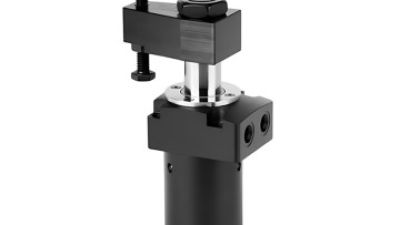
An angle push cylinder is a compact hydraulic actuator designed to adjust the working angle of attachments on 1–6 ton small excavators. Its cylinder body, piston rod, seals, mounting points, and hydraulic connections are engineered to deliver controlled linear force in confined spaces. By converting hydraulic pressure into smooth pushing and retracting movement, it allows operators to tilt a bucket, bulldozer blade, grading tool, or other accessory with greater precision than fixed mounting arrangements.
In practical applications, the cylinder supports material excavation, surface leveling, trench shaping, lateral bulldozing, slope finishing, and site cleanup. Its adjustable angle helps the attachment follow uneven ground while reducing unnecessary machine repositioning. A suitable design should provide adequate force, stroke length, corrosion resistance, and protection against dust, mud, and hydraulic contamination. High-quality seals and accurately aligned mounting joints also help limit leakage, side loading, and premature wear during frequent operation.
When selecting an angle push cylinder, match the bore diameter and operating pressure with the excavator’s hydraulic system and required attachment force. The stroke should provide the desired tilt range without causing mechanical interference at either end of travel. Buyers should also check pin diameter, center-to-center mounting distance, port size, retracted and extended dimensions, rod material, and seal compatibility. For demanding environments, reinforced mounting components, durable surface treatment, and easily replaceable seals can improve service life and maintenance efficiency.
Request pressure-test results, fatigue-cycle data, material certificates, and seal specifications. Ask for traceable batch records. Attractive pricing proves little.
Check bore diameter, rod diameter, stroke tolerance, and rated working pressure. Small dimensional errors can cause uneven barrel wear. Request inspection reports.
Review tubing material, rod heat treatment, chrome thickness, surface hardness, and rod straightness. Inspect barrel finish and weld penetration. These details face mud, dust, and shock loads.
The testing should include pressure holding, leakage checks, fatigue cycling, and realistic load tests. Ask about temperature, oil type, test pressure, and cycle count. Short tests may hide field failures.
No. A recognized quality system supports process control, but it cannot prove field durability alone. Compare certification with test records and service evidence.
Review claims by failure type, not only warranty length. Confirm spare seals, repair drawings, and regional technical assistance. Send one technical question first. Watch the response.
Compare quoted lead times with shipment records from the previous twelve months. Check machining capacity and replacement-part availability. Delays can cost more than a lower unit price.
Consider a factory visit, random dimensional inspection, and one field trial. Use samples from the actual production line. A showroom sample may mislead.
Keep records after 500 operating hours, including leakage, response, load conditions, and repairs. Compare failures with the original test data. My checklist may still miss something.
Excavator Cylinder is a core hydraulic component that converts fluid pressure into the controlled movement required for digging, lifting, and grading. Its durability, sealing performance, load capacity, stroke accuracy, and resistance to harsh working conditions directly affect excavator productivity and operating costs. This guide explains how global buyers can evaluate manufacturers by examining engineering expertise, production consistency, material selection, quality control, testing procedures, customization capabilities, delivery reliability, and after-sales support.
The overview presents ten leading types of manufacturers for international buyers without focusing on brand names, highlighting differences in regional strengths, product ranges, manufacturing capacity, and market coverage. It also introduces practical standards for comparing cylinder quality and performance, including pressure testing, fatigue resistance, corrosion protection, dimensional accuracy, and compatibility with various excavator models. Finally, buyers are guided to match a manufacturer’s technical capabilities, certifications, service network, lead times, pricing, and warranty terms with their equipment requirements and long-term operating goals.