China has really turned into a big sourcing hub for hydraulic and pneumatic components. Experienced manufacturers there supply things like Cylinder Piston Rod products to equipment builders, distributors, and maintenance teams all over the world. The strongest suppliers usually bring together machining capacity, material control, and technical service that actually responds when you need it.
A dependable supplier? They should be willing to talk through steel grades, chrome plating thickness, surface roughness, straightness, and hardness before they send a quote. These details aren't just nice-to-know—they affect seal life, corrosion resistance, and how the rod performs under repeated loads. Serious manufacturers can also provide inspection reports, production samples, dimensional records, and packaging you can trace. That kind of evidence matters way more than pretty catalog photos.
Quality starts with the material.
If you're buying globally, it's worth reviewing manufacturing experience, export history, customization capability, and communication standards. A supplier might offer competitive pricing but still struggle with drawings, tolerances, or after-sales support. That risk is easy to miss. But it definitely deserves attention.
This guide looks at leading Chinese Cylinder Piston Rod suppliers using practical purchasing criteria. It covers factory capability, quality systems, product range, delivery reliability, and application knowledge. Buyers can compare suppliers for construction machinery, Agricultural Equipment, industrial cylinders, and specialized hydraulic systems. The evaluation stays realistic, because no manufacturer is perfect in every category. Some companies are great at large-volume production, while others handle complex, low-volume designs better. Asking for samples and verifying production details is still essential before placing a long-term order. Reliable sourcing isn't just about finding a low price. It's about choosing a manufacturer that can repeat the required quality, communicate clearly, and support the product after it ships.
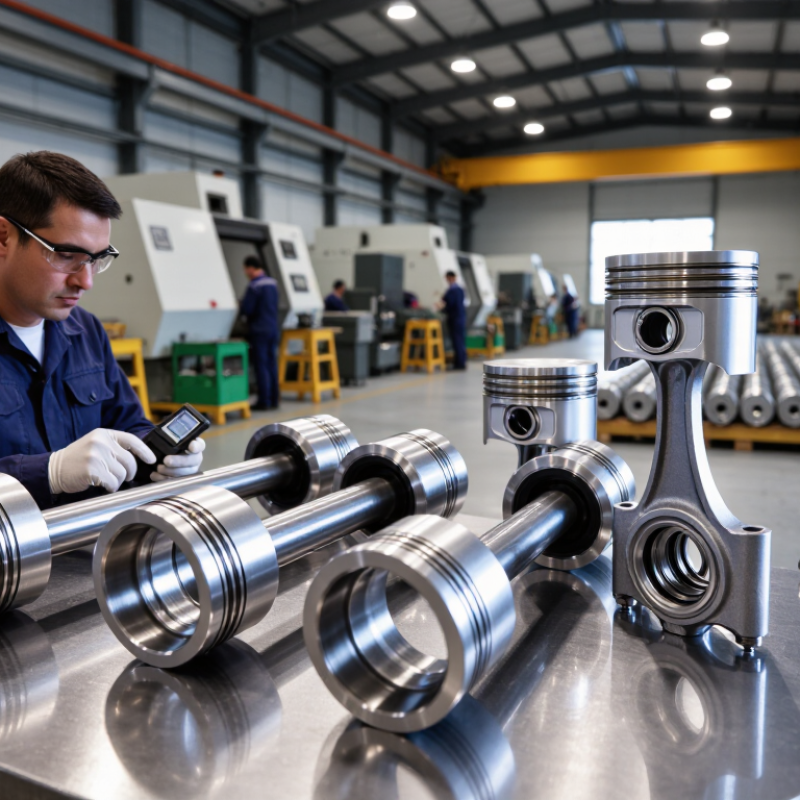
Cylinder piston rods transfer hydraulic or pneumatic force from the piston to a working mechanism. Their structure looks simple, but performance depends on several precise surfaces. A typical rod includes a steel core, a polished outer diameter, and a threaded or clevis connection. The polished section passes through seals and guide rings. Small scratches can create leakage, especially under high pressure.
Material selection depends on load, environment, and operating speed. Carbon steel suits many standard cylinders after heat treatment and surface hardening. Stainless steel performs better where moisture or chemical exposure is common. Chrome plating can improve wear resistance and corrosion protection, but coating thickness must remain uniform. Some applications use alternative surface treatments. The choice should match actual conditions, not only a catalog specification.
Industrial functions include lifting, clamping, steering, pressing, and material handling. In heavy equipment, the rod must resist bending, impact, and side loading. In factory automation, straightness and repeatable movement matter more. Buyers should check diameter tolerance, straightness, surface roughness, thread accuracy, and plating adhesion. Measurement records add confidence during supplier evaluation. A drawing may appear complete, yet omit seal compatibility or storage requirements. That gap deserves attention. Even experienced teams can overlook it. Practical samples, load testing, and clear inspection criteria reduce avoidable failures.
China’s cylinder piston rod manufacturing landscape is built on a deep steel supply chain. The World Steel Association reported that China produced about 1.019 billion tonnes of crude steel in 2023. This scale supports competitive sourcing for Hydraulic Cylinder Piston Rod components.
Manufacturers commonly use 42CrMo, C45, and stainless steel grades. Typical production includes turning, heat treatment, grinding, and hard-chrome plating. Surface roughness often reaches Ra 0.2–0.4 micrometres after final grinding. Rod straightness may be controlled within 0.2–0.5 millimetres per metre, depending on application requirements. The ISO 10100 Hydraulic Cylinder standard remains a useful reference for leakage and performance testing.
Market demand is also expanding. A 2024 MarketsandMarkets report valued the global hydraulic cylinders market at over 14 billion US dollars and forecast continued growth through 2029. Construction machinery, agricultural equipment, and material-handling systems drive much of this demand. Chinese suppliers can offer large-volume machining, but capability varies considerably. Some workshops provide complete inspection records. Others rely too heavily on visual checks.
That gap matters. Buyers should review material certificates, coating thickness, salt-spray results, and fatigue-test records. Sample rods may look identical while showing different hardness depths. I would also question unusually low quotations. They may reflect thinner plating, weaker sealing preparation, or incomplete inspection. Production speed is valuable, but consistency deserves closer attention.
| Manufacturing Dimension | Common Industry Range or Requirement | Typical Materials and Processes | Relevant Standards or Inspection Points | Buyer Evaluation Notes |
|---|---|---|---|---|
| Product Scope | Hydraulic and pneumatic cylinder piston rods; solid, stepped, threaded, clevis-ended, and custom-machined designs. | Cold-drawn or hot-rolled steel blanks followed by turning, grinding, polishing, threading, and surface treatment. | Drawing review should define rod diameter, overall length, thread geometry, end configuration, and datum references. | Confirm whether the supplier manufactures the rod in-house or only performs finishing and trading activities. |
| Common Rod Diameters | Approximately 12–200 mm for many industrial cylinder applications; larger diameters are generally project-specific. | Diameter selection depends on axial load, buckling risk, bearing arrangement, stroke length, and available cylinder envelope. | Dimensional tolerances should be stated on the technical drawing or purchase specification rather than assumed from nominal size. | Request a capability chart showing the supplier’s actual grinding, polishing, straightening, and inspection limits. |
| Common Rod Lengths | Short production lengths are common, while finished lengths above 3,000 mm usually require project review and additional straightness control. | Long rods may require controlled heat treatment, multi-stage grinding, steady-rest support, and dedicated straightening. | Measure overall length, end-face squareness, concentricity, and straightness over the full finished length. | For long-Stroke Cylinders, ask for a documented straightness method and inspection report for every production lot. |
| Carbon and Alloy Steels | Medium-carbon and alloy steels are widely used where strength, machinability, and cost balance are important. | C45 / C45E may be used for general-duty rods; 42CrMo4 is commonly selected when higher strength and hardenability are required. | Material certificates should identify chemical composition, heat number, delivery condition, and applicable EN or equivalent specification. | Match steel grade and heat treatment to the cylinder load, fatigue duty, corrosion environment, and welding restrictions. |
| Stainless-Steel Options | Stainless rods are used where corrosion resistance is more important than the lowest initial cost. | Common choices include martensitic or precipitation-hardening stainless grades, selected according to strength and corrosion requirements. | Verify the exact grade, heat-treatment condition, surface hardness, magnetic behavior, and corrosion-test requirement. | Do not treat stainless steel as automatically corrosion-proof; chemical exposure, salt spray, temperature, and seal compatibility remain important. |
| Surface Protection | Hard chrome plating, electroless nickel, nitriding, stainless construction, and specialized coatings are used for different environments. | Hard chrome is widely used for wear resistance and seal compatibility; alternative coatings may be selected where coating damage or corrosion is a concern. | Specify coating thickness, hardness, adhesion, porosity, surface defects, and whether grinding is performed after plating. | For hydraulic applications, evaluate coating performance together with seal material, fluid type, contamination level, and maintenance practice. |
| Chrome-Plated Surface | Finished chrome thickness is often specified by application; approximately 20–50 μm is a common engineering reference range, but it is not universal. | Typical sequence: base-metal preparation, plating, crack or defect inspection, grinding, polishing, cleaning, and final measurement. | Control plating uniformity, pits, blisters, flaking, grinding burns, exposed base metal, and surface roughness. | Use the buyer’s seal manufacturer requirements and operating environment to establish the minimum acceptable coating thickness. |
| Surface Roughness | Many rod-seal applications specify a finely polished surface; Ra values around 0.2–0.4 μm are common reference points, subject to seal design. | Centerless grinding, cylindrical grinding, belt polishing, and superfinishing may be combined to achieve the required finish. | Define Ra, Rz, measurement direction, sampling length, gauge calibration, and inspection location. | Excessively rough or directionally marked surfaces can accelerate seal wear; excessively smooth surfaces may also affect lubricant retention. |
| Surface Hardness | Hardness depends on the substrate, heat treatment, plating system, and required wear life; it should be stated as a controlled specification. | Induction hardening, quench-and-temper treatment, nitriding, and hard chrome plating are possible combinations. | Specify hardness scale, test method, test location, minimum value, and allowable decarburization or soft zones. | Check that hardness testing does not damage the sealing surface and that the reported value corresponds to the finished condition. |
| Straightness | Long piston rods require tighter straightness control than short rods; the acceptable value must be defined by diameter, length, and cylinder design. | Process control may include stress relief, precision grinding, straightening, and final runout inspection. | Use a clearly defined method such as total indicator reading over a specified span or maximum deviation over full length. | Ask for the measurement setup, support spacing, rotation method, and whether straightness is checked before or after plating. |
| Threads and End Features | Metric, Unified, and other thread forms may be produced, together with internal threads, cross-holes, wrench flats, eyes, and clevis ends. | CNC turning, thread cutting, thread rolling, milling, drilling, broaching, and grinding are selected according to geometry and material. | Specify thread standard, pitch, tolerance class, effective length, runout, chamfer, end-face condition, and gauge method. | Provide a complete 2D drawing or 3D model; thread names alone are insufficient for reliable interchangeability. |
| Dimensional Inspection | Critical dimensions commonly include diameter, length, concentricity, roundness, taper, thread dimensions, and end-feature position. | Micrometers, air gauges, roundness testers, CMMs, thread gauges, profilometers, and optical systems may be used. | Inspection equipment should be calibrated and traceable to a recognized national or international measurement system. | Request a first-article inspection report and a defined sampling plan for recurring production orders. |
| Hydraulic Cylinder Standards | ISO 6020/1 and ISO 6020/2 cover mounting dimensions for selected medium-duty and compact hydraulic cylinders; ISO 6022 covers heavy-duty hydraulic cylinders. | Rod dimensions and mounting interfaces are designed around the complete cylinder assembly rather than the rod alone. | Confirm the exact standard edition, pressure class, mounting type, rod-end geometry, and interchangeability requirements. | Standards define particular interfaces or design aspects; they do not replace the buyer’s material, coating, and performance specification. |
| Quality Documentation | Typical export documentation includes dimensional reports, material certificates, coating reports, packing lists, and certificates of conformity. | More demanding projects may require heat-treatment records, plating-bath controls, non-destructive testing, and full traceability. | Agree on inspection level, document format, retention period, nonconformance procedure, and approval of any deviations. | Documentation quality is a useful indicator of process maturity, but it should be verified against physical inspection results. |
| Non-Destructive Testing | Magnetic-particle, ultrasonic, dye-penetrant, or visual inspection may be used depending on material, geometry, and risk level. | Surface crack inspection is particularly relevant after heat treatment, grinding, and plating. | Define the inspection method, acceptance criteria, inspection coverage, operator qualification, and reporting format. | For safety-critical or high-cycle rods, require an agreed NDT plan before production rather than after delivery. |
| Major Application Segments | Construction equipment, agricultural machinery, material handling, mining, industrial automation, mobile hydraulics, and process equipment. | Application requirements vary by load, pressure, stroke, side loading, corrosion exposure, temperature, and duty cycle. | Evaluate rod design together with seals, guide rings, bearings, wipers, hydraulic fluid, and mounting configuration. | A supplier experienced in one segment may not automatically meet the requirements of another segment without engineering validation. |
| Export and Packaging | Long, precision-finished rods require individual protection against impact, moisture, contamination, and coating damage. | Common measures include protective sleeves, corrosion-inhibiting paper or film, sealed wrapping, separators, and reinforced wooden or steel cases. | Packaging should identify part number, quantity, heat or lot traceability, gross weight, and handling orientation where necessary. | Confirm container loading limits, moisture protection, lifting points, and preservation duration for the complete shipping route. |
| Supplier Selection Priorities | Technical capability, repeatability, traceability, coating quality, lead time, communication, and total delivered cost. | Preferred suppliers can demonstrate controlled machining, finishing, inspection, corrective action, and change management. | Assess quality-system certification, process capability evidence, sample approval, audit access, and warranty terms. | Compare suppliers using the same drawing revision, acceptance criteria, packaging specification, and delivery terms. |
| Cost Drivers | Steel grade, diameter, length, machining complexity, heat treatment, coating system, inspection level, packaging, and order quantity. | Special stainless grades, long lengths, tight straightness, complex rod ends, and special coatings generally increase processing cost. | Separate material, machining, surface treatment, inspection, packaging, tooling, and logistics charges in the quotation. | The lowest unit price may not provide the lowest total cost if premature seal wear, corrosion, or dimensional variation causes downtime. |
| Recommended RFQ Information | Part drawing, annual quantity, batch size, material grade, heat treatment, coating, roughness, tolerances, application, and delivery destination. | Include operating pressure, temperature, speed, side load, environment, hydraulic fluid, seal system, and required service life when available. | State applicable standards, inspection documents, sampling plan, packaging, Incoterms, and approval requirements. | Complete technical data enables comparable quotations and reduces the risk of substitutions that are unsuitable for the cylinder assembly. |
| Data Limitation | The ranges above are general engineering references for supplier evaluation, not a ranking of named companies or a substitute for an approved product drawing. Final values should be agreed between the buyer and the selected manufacturer. | |||
China Top Cylinder Piston Rod Suppliers for Global Buyers
How to Evaluate Top Chinese Piston Rod Suppliers
A reliable supplier should understand your cylinder’s working pressure, stroke length, and mounting conditions. Ask for material grades, heat-treatment records, and chrome-layer specifications. A professional supplier can explain why each choice fits your application, not merely quote a low price. Request a Hydraulic Piston Rod sample with measured diameter, straightness, surface roughness, and hardness data.
Inspect the production process through clear photos, live video, or an onsite audit. Look for controlled grinding, clean storage, and protection between machining stages. Ask for inspection reports linked to batch numbers. Confirm whether critical dimensions are checked with calibrated equipment. Ask for evidence. Packaging also matters. Wooden cases, rust prevention, and sealed ends can prevent damage during long transport.
Communication reveals practical reliability. Test how quickly the supplier handles a drawing change or a rejected sample. Their answer should include corrective action, not vague promises. Check export experience, production capacity, lead times, and payment documentation carefully. A common mistake is trusting certificates without verifying their scope and validity. I would also compare samples from several factories, because polished sales language can hide inconsistent tolerances. No supplier is perfect. A careful buyer should record weaknesses, question unclear data, and leave room for improvement.
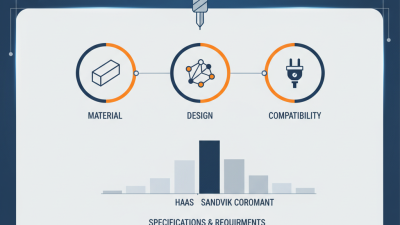
This buyer evaluation model uses a 100-point weighting framework. Material traceability and dimensional accuracy receive the highest weights because piston rods must maintain consistent mechanical performance, fit, and durability. Buyers should verify each criterion through inspection reports, process records, samples, and third-party audits rather than relying only on supplier claims.
Global buyers evaluating China’s cylinder piston rod suppliers should examine measurable quality standards, not attractive product photos. Reliable production starts with traceable steel certificates, controlled chemical composition, and documented heat-treatment records. Engineers should verify rod diameter, straightness, surface roughness, hardness, and coating thickness against agreed drawings.
Testing must reflect actual hydraulic service. Common checks include tensile testing, dimensional inspection, runout measurement, adhesion testing, and salt-spray evaluation for coated surfaces. A coordinate measuring machine can confirm critical dimensions, while roughness instruments inspect the sealing area.
Sample rods should also undergo fatigue or cyclic testing when pressure changes are frequent. Inspection reports need batch numbers, test dates, equipment identification, and responsible personnel.
Production capability depends on more than machine quantity. CNC turning, centerless grinding, polishing, and controlled plating processes should follow written procedures. In-process inspection reduces defects before final assembly. A capable supplier can explain its monthly capacity, tooling limits, lead times, and emergency response process. Yet no factory is flawless. Minor variation can appear during coating or grinding, especially across large batches. Buyers should request corrective-action records and independent pre-shipment inspections. Clear drawings and honest communication often prevent more problems than another sales promise.
Customization, minimum orders, and technical support often determine whether a Rod Cylinder project performs reliably in the field. Experienced suppliers review load, stroke length, mounting space, operating pressure, and working temperature before suggesting materials. They may offer carbon steel, stainless steel, chrome-plated surfaces, or induction-hardened options. These details affect wear, corrosion resistance, and service life.
Minimum order quantities vary by machining complexity and surface treatment. A simple replacement rod may require a smaller order. A custom piston rod with special threads, tight tolerances, or unusual packaging may need more units. Ask for inspection records, dimensional reports, and sample approval before production. Technical support should cover drawings, tolerance checks, sealing compatibility, and installation questions. Clear communication matters. Small errors become expensive later.
Tips: Send a marked drawing with critical dimensions. Include photos of the original part. Confirm thread standards and coating thickness. Request one sample before a larger order. Keep written records of every revision.
A dependable supplier should explain limitations, not only promise fast delivery. Still, no supplier gets every detail right. Buyers should question unclear tolerances and test samples under realistic loads. In my experience, practical feedback from technicians improves the final design. Sometimes, a slightly simpler specification offers better consistency and lower maintenance costs.
For global buyers, China’s cylinder piston rod suppliers should be assessed beyond unit price. The World Bank’s 2023 Logistics Performance Index ranked China 19th, with a score of 3.7 out of 5. This supports efficient export networks, but port performance still varies by region. Request factory location, loading port, lead time, and shipment history. Small details matter.
Pricing usually combines alloy steel, turning, grinding, chrome plating, inspection, packaging, and freight. A lower quotation may exclude corrosion protection or export-grade crates. UNCTAD’s Review of Maritime Transport 2023 reports that ships carry over 80% of global merchandise trade by volume. Ocean freight therefore influences the landed cost heavily. Compare FOB, CIF, and DDP carefully. DDP can simplify delivery, but local taxes and customs responsibilities must be clearly defined.
Buyers should specify rod diameter tolerance, surface roughness, hardness, coating thickness, straightness, and salt-spray requirements. Include the Cylinder Rod Nut dimensions and thread standard in the technical drawing. ISO 9001 certification helps, yet it does not replace process evidence. Ask for material certificates, plating records, dimensional reports, and sample approval. Independent inspection before loading is practical. I would also test packaging after vibration, because polished rods can arrive scratched despite good machining. That risk is easy to underestimate. Houling schedules, currency changes, and steel costs can alter quotations quickly, so validity periods should be written into every offer.
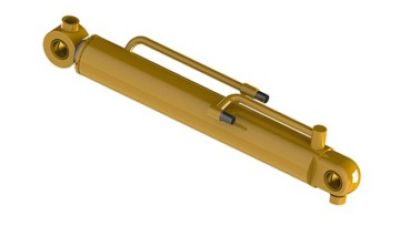
Choosing the right small excavator bucket cylinder starts with matching its specifications to the machine’s operating class and working conditions. Small excavators below 10 tons commonly require a cylinder that can deliver controlled retraction and extension without sacrificing response speed. According to ISO 4413 hydraulic-system guidance, pressure ratings, contamination control, and safe energy transmission should be considered together. Check the required bore diameter, rod diameter, stroke length, mounting dimensions, and working pressure before installation.
Load capacity is equally important. A cylinder’s theoretical pushing force is calculated as hydraulic pressure multiplied by piston area, while retraction force is reduced by the rod area. This means an oversized rod may improve resistance to bending but reduce pulling force and usable speed. For construction and municipal work, prioritize a hardened rod, durable seals, and effective corrosion protection. Farmland reconstruction may require stronger protection against mud and dust, while mining applications demand robust sealing, wear-resistant surfaces, and reliable performance under repeated impact loads.
Service life also depends on alignment and maintenance. Industry reliability studies consistently identify contamination and side loading as major causes of hydraulic-cylinder failure, making clean oil, correct lubrication, and accurate pin alignment essential. Select a cylinder with accessible seal kits and compatible hydraulic connections, then verify that the bucket linkage reaches its intended digging angle throughout the full stroke. A properly matched cylinder improves digging control, reduces leakage risk, and supports stable productivity across varied job sites.
It transfers hydraulic or pneumatic force from the piston to a working mechanism. Common functions include lifting, clamping, steering, pressing, and material handling.
A typical rod has a steel core, polished outer diameter, and threaded or clevis connection. The polished section passes through seals and guide rings.
Seals contact the polished surface continuously. Small scratches matter. They can cause leakage, especially during high-pressure operation.
Carbon steel suits many standard cylinders after heat treatment and surface hardening. Stainless steel performs better around moisture or chemicals.
It can improve wear resistance and corrosion protection. Coating thickness must remain uniform. Alternative treatments may fit some applications better.
Check diameter tolerance, straightness, surface roughness, hardness, thread accuracy, and coating adhesion. Measurement records provide useful evidence during evaluation.
Common tests include dimensional inspection, runout measurement, tensile testing, adhesion testing, and salt-spray evaluation. Frequent pressure changes may require fatigue testing.
Look for controlled turning, grinding, polishing, and plating procedures. In-process inspection helps catch defects before final assembly. Machine quantity alone proves little.
Drawings may omit seal compatibility, storage requirements, or inspection details. That gap matters. Practical samples and clear criteria can expose overlooked problems.
Request batch numbers, test dates, equipment details, and responsible personnel on inspection reports. Consider independent pre-shipment inspection. No factory is flawless.
This guide explains how a Cylinder Piston Rod is designed, manufactured, and selected for industrial hydraulic and pneumatic applications. It covers the rod’s structure, surface treatment, core materials, strength requirements, and role in converting fluid pressure into reliable mechanical movement. China’s manufacturing landscape is also examined, with attention to production scale, engineering capabilities, machining precision, heat treatment, and supply flexibility. Global buyers will learn how to evaluate suppliers through technical documentation, quality systems, inspection procedures, dimensional accuracy, corrosion resistance, and performance testing.
The article also discusses customization options, minimum order quantities, sample development, communication efficiency, and technical support. In addition, it outlines practical considerations for export logistics, packaging, lead times, payment arrangements, and total purchasing costs. By comparing supplier capabilities rather than focusing only on price, buyers can identify dependable manufacturing partners that provide consistent quality, suitable customization, stable delivery, and long-term support for demanding industrial projects.