Leave Your Message
0%

Global buyers are paying closer attention to hydraulic component reliability these days—and that includes the often-overlooked Cylinder Mounting Base. It's the part that helps with alignment, load transfer, and keeping a cylinder stable in tough equipment. And honestly, small dimensional errors? They can lead to vibration, uneven wear, or a real headache during installation.

Grand View Research says the global Hydraulic Cylinders market was worth about USD 14.7 billion in 2023. Their analysis also points to continued growth through 2030, pushed along by construction, agriculture, industrial machinery, and material handling. So it's not just complete cylinders that are in demand—dependable mounting components matter too. MarketsandMarkets likewise flags automation, heavy equipment modernization, and infrastructure investment as big drivers behind hydraulic equipment demand.

Now, the right manufacturer should show more than production capacity. Buyers should look at material certificates, machining tolerances, surface treatment, load-test records, and traceability procedures. ISO 9001 certification can be a good sign of controlled quality systems, but you still want dimensional verification reviewed part by part. Practical experience matters here. A steel base can look tough as nails and still fail after repeated side loading or poor weld preparation.

Details matter. That's really the whole point.

This guide looks at leading Cylinder Mounting Base manufacturers for global buyers, weighing engineering capability, manufacturing consistency, customization support, export experience, and after-sales communication. It also considers evidence that's sometimes missing from supplier websites. No ranking is perfect. Supplier data can be incomplete, and a factory with impressive equipment may still lack reliable process discipline. So before choosing a long-term partner, buyers should compare technical drawings, inspection samples, lead times, and total landed cost.
Top Cylinder Mounting Base Manufacturers for Global Buyers

What Is a Cylinder Mounting Base and Why Does It Matter?

Top Cylinder Mounting Base Manufacturers for Global Buyers

A cylinder mounting base supports the actuator, transfers force, and preserves alignment. It is not merely a steel plate. The base controls how hydraulic or pneumatic loads enter the machine frame. Poor alignment can create side loading, seal wear, rod bending, and uneven motion. Small errors become expensive.

The global hydraulic equipment market was valued at about USD 49.5 billion in 2023, according to MarketsandMarkets’ 2023 market report. Grand View Research also estimates continued growth in hydraulic cylinder demand through 2030. These figures reflect expanding machinery use, but they also raise expectations for mounting accuracy.

A reliable base should match cylinder bore, stroke, load direction, mounting style, and operating environment. Engineers should check bolt strength, weld quality, flatness, and fatigue resistance. Do not rely on appearance alone.

Details matter. A machined locating shoulder can reduce movement during repeated cycles. Drainage holes may prevent water retention around outdoor mounts. Protective coatings help, but coating thickness can affect fit. ISO 1219 symbols can clarify circuit design, while project drawings should define tolerances separately.

One overlooked issue is access for maintenance. A perfectly rigid base may still obstruct seal replacement. That is an uncomfortable design flaw.

Global buyers should request material certificates, dimensional inspection records, load calculations, and corrosion testing. Supplier claims deserve verification, especially when the base operates near heat, vibration, or abrasive dust.

Key Types of Cylinder Mounting Bases for Industrial Applications

Industrial cylinder mounting bases connect hydraulic or pneumatic cylinders to frames, guards, and moving equipment. Their design affects alignment, vibration control, and service life. A Welded Cylinder Mounting Base suits heavy machinery where permanent strength matters. It usually uses thick steel plates, reinforced corners, and accurately positioned mounting holes. Fabricators must control weld distortion, or the cylinder may operate under unwanted side loads.

Clamp-style bases allow faster installation and easier replacement. They work well on modular production lines and test equipment. Flange-mounted bases provide a compact connection around the cylinder body or rod end.

Pivot and trunnion bases support angular movement, which is useful in lifting arms, presses, and automated handling systems. Each type has limits. A rigid base can resist movement, but it may transfer shock into the frame. A pivoting base reduces binding, but its pins require inspection and lubrication.

Tips: Confirm the cylinder bore, stroke, load direction, and mounting pattern before fabrication. Check clearance around hoses and fittings. Use a machinist’s square during installation. It helps reveal misalignment early. Review the base after the first operating cycle, especially if vibration or uneven wear appears. In practice, small geometry errors are easy to underestimate. They can become expensive maintenance problems. Choose corrosion protection according to moisture, chemicals, and cleaning methods. Record torque values and inspection dates for reliable long-term maintenance.

How to Evaluate Cylinder Mounting Base Manufacturers

Top Cylinder Mounting Base Manufacturers for Global Buyers

Choosing a cylinder mounting base manufacturer requires more than comparing prices. Check material certificates, machining tolerances, surface treatment, and production records. A reliable supplier should explain how each base handles vibration, load changes, and repeated installation. Ask for inspection reports and sample measurements, especially around bolt holes and welded joints. For a Welded Lock Valve Mounting Base, inspect weld consistency, alignment, and leakage-control design. A polished catalog is not proof of stable manufacturing.

Tips: Request a sample first. Measure it yourself. Review packaging details, lead times, and replacement procedures. Ask whether drawings can be revised for your cylinder model. Clear answers usually reveal practical experience.

Factory audits can show useful details. Look for calibrated tools, traceable inspection steps, and workers checking parts before packing. Communication also matters. If technical questions receive vague replies, future problems may become expensive. I have found that a low quotation can hide weak documentation or inconsistent finishing. Still, no evaluation is perfect; even a careful audit may miss a batch issue. Choose manufacturers that accept feedback, investigate defects, and provide corrective records. Their long-term reliability should be judged through evidence, not confident promises.

Manufacturing Quality, Materials, and Engineering Standards

Top Cylinder Mounting Base Manufacturers for Global Buyers

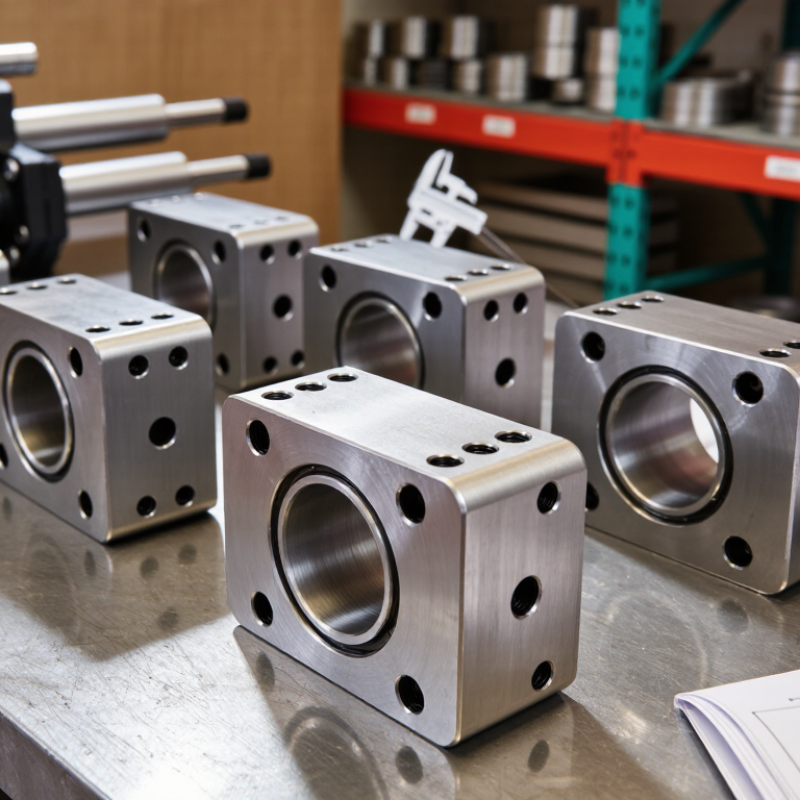
Manufacturing quality begins with repeatable control, not attractive product photos. Experienced manufacturers inspect plate thickness, hole spacing, weld penetration, and surface flatness during production. A base should sit firmly without forcing the cylinder into alignment. That small detail prevents stress during installation and service.

Material selection depends on load, temperature, moisture, and chemical exposure. Carbon steel offers strength and cost efficiency, while stainless steel supports harsher environments. High-quality suppliers provide material certificates, batch traceability, and clear coating specifications. For a Welded Relief Valve Mounting Base, engineers should verify weld strength, valve clearance, and access for inspection. Tight tolerances matter here.

Engineering standards must appear in drawings, inspection plans, and test records. Buyers should request dimensional reports, welding procedures, and load calculations before approval. CNC-machined holes should match the stated tolerance, not merely look acceptable. A reliable manufacturer also reviews transportation vibration and field installation conditions.

Details matter more. A polished certificate cannot correct poor welding.

Even strong suppliers can miss practical issues. Drainage, tool access, or coating damage may receive less attention than structural calculations. That weakness deserves an honest review. Global buyers can improve reliability by checking samples, comparing inspection data, and asking how nonconforming parts are handled. The best engineering process remains open to correction.

Top Cylinder Mounting Base Manufacturers for Global Buyers - Manufacturing Quality, Materials, and Engineering Standards

Technical benchmark for evaluating cylinder mounting base manufacturers. Values represent commonly specified engineering ranges and internationally recognized standards; final requirements should be confirmed against the approved drawing, load case, and operating environment.

Manufacturer Capability Profile Typical Base Configuration Common Materials Manufacturing Processes Relevant Engineering Standards Typical Dimensional Control Surface Protection Quality and Inspection Expectations Typical Application Range
Heavy-duty welded steel base specialist
Designed for high static loads, shock loading, and industrial machinery.
Welded pedestal, foot mount, trunnion support, or custom clevis base.
Typical mounting plates: 10–40 mm thick, subject to load calculations.
ASTM A36 steel S355 structural steel ASTM A572 Grade 50
Material selection depends on yield strength, weldability, and operating temperature.
CNC cutting, milling, drilling, fixture-controlled welding, stress relief when required, and final machining of mounting faces. ISO 3834 for welding quality management; ISO 5817 for weld quality levels; ISO 2768 for general tolerances where no individual tolerance is specified. Typical machined mounting-face flatness: 0.05–0.20 mm, depending on size and function.
Hole position commonly controlled to approximately ±0.10–0.25 mm on precision assemblies.
Zinc-rich primer, powder coating, wet paint, or hot-dip galvanizing.
Corrosion system should be selected according to ISO 12944 exposure category.
Material certificates, weld visual inspection, dimensional report, hole-location verification, and magnetic-particle or dye-penetrant testing when specified. Presses, lifting equipment, material-handling systems, construction machinery, and stationary Hydraulic Power Units.
Precision machined mounting base supplier
Focused on accurate alignment between the cylinder, guide system, and driven mechanism.
One-piece machined base, flanged adapter, locating plate, or precision clevis block. C45 / 1045 carbon steel 4140 alloy steel 6061-T6 aluminum
Heat treatment may be applied to alloy steel components.
CNC milling, turning, boring, reaming, thread machining, coordinate measurement, and optional black oxide or anodizing. ISO 2768-1 for general dimensional tolerances; ISO 1101 for geometrical tolerancing; ISO 21920-1 for surface texture specification. Typical critical-hole diameter tolerance: H7 when specified for locating fits.
Typical machined surface roughness: Ra 1.6–3.2 µm for functional faces, subject to drawing requirements.
Black oxide, electroless nickel, zinc plating, hard anodizing for aluminum, or corrosion-resistant paint. First-article inspection, calibrated CMM measurement, thread-gauge inspection, surface-roughness verification, and traceable inspection records. Robotic equipment, automation lines, Machine Tools, test rigs, and high-repeatability hydraulic assemblies.
Hydraulic-cylinder interface specialist
Optimized for compatibility with standard hydraulic cylinder mounting arrangements.
Base flange, foot mount, rear clevis, front flange, spherical-eye adapter, or trunnion mount. C45 / 1045 steel S355 steel Ductile iron
Material is selected according to cylinder bore, rod force, pin loading, and fatigue duty.
Forging or plate preparation, Cnc Machining, boring, pin-hole finishing, welding where applicable, and assembly-fit verification. ISO 6020/1 and ISO 6020/2 for selected hydraulic-cylinder dimensions; ISO 6022 for heavy-duty hydraulic cylinders; ISO 4413 for hydraulic-system safety principles. Coaxiality and parallelism of functional mounting features are controlled according to the cylinder assembly drawing.
Pin-hole fits may use H7 or H8 bores with separately specified pin tolerances.
Zinc plating, phosphate treatment, painted steel, or treated ductile iron.
Contact surfaces and precision bores are normally masked before coating.
Bore and pin inspection, mounting-face alignment check, material traceability, dimensional inspection, and functional fit testing with a reference component. Mobile hydraulics, agricultural equipment, industrial actuators, refuse equipment, and lifting mechanisms.
Corrosion-resistant stainless-steel base manufacturer
Intended for washdown, outdoor, marine, food-processing, or chemically exposed environments.
Stainless foot mount, compact flange adapter, welded support bracket, or hygienic mounting plate. 304 / 304L stainless steel 316 / 316L stainless steel
Grade 316/316L is commonly selected where chloride exposure is a major concern.
Laser cutting, CNC machining, TIG or robotic welding, passivation, electropolishing when required, and controlled deburring. ISO 3834 for welding quality; ASTM A967 or ASTM A380 practices for stainless-steel cleaning and passivation; ISO 2768 where applicable. Typical functional-face roughness may range from Ra 0.8–3.2 µm depending on hygiene and sealing requirements.
Welding distortion control is essential on thin stainless assemblies.
Passivation, electropolishing, brushed finish, or untreated mill finish when permitted by the application. Alloy verification, weld inspection, passivation records, surface-finish measurement, dimensional inspection, and chloride-contamination control where required. Food and beverage machinery, pharmaceutical equipment, marine systems, outdoor automation, and chemical-processing equipment.
Lightweight aluminum mounting base specialist
Suitable where reduced mass, corrosion resistance, and ease of installation are priorities.
Extruded or machined adapter plate, compact foot mount, flange plate, or modular support bracket. 6061-T6 aluminum 6082-T6 aluminum
Steel inserts or hardened bushings may be used in highly loaded pin or threaded locations.
CNC machining, extrusion cutting, tapping, reaming, thread inserts, and controlled anodizing preparation. ISO 2768 for general tolerances; ISO 1101 for geometric requirements; ASTM B221 for aluminum extruded products where applicable. Typical machined-face roughness: Ra 1.6–3.2 µm.
Threaded holes may require steel inserts where repeated assembly or high tightening torque is expected.
Clear or hard anodizing, powder coating, chemical conversion coating, or painted finish. Alloy and temper verification, dimensional inspection, thread inspection, surface-finish checks, and load validation for safety-critical applications. Packaging equipment, mobile automation, laboratory machinery, light-duty actuators, and compact robotic systems.
High-volume CNC and sheet-metal production supplier
Focused on repeatability, cost control, and standardized production batches.
Laser-cut and formed bracket, bolted mounting plate, folded channel base, or standardized adapter. Cold-rolled carbon steel Galvanized steel 304 stainless steel Aluminum sheet Laser cutting, punching, press-brake forming, tapping, spot welding, robotic welding, and batch CNC machining. ISO 9001 quality-management systems; ISO 2768 for general tolerances; ISO 3834 when welded fabrication controls are required. Typical sheet-metal bend-angle tolerance: approximately ±1° unless otherwise specified.
Hole and feature tolerances depend on material thickness, process, and secondary machining.
Powder coating, zinc plating, pre-galvanized sheet, e-coating, or wet paint. In-process inspection, go/no-go gauges, sampling plans, coating-thickness checks, lot traceability, and corrective-action procedures. OEM equipment, conveyors, packaging lines, agricultural machinery, and general industrial assemblies.
Custom engineering and low-volume prototype manufacturer
Appropriate for new designs, replacement parts, unusual mounting geometry, and limited production quantities.
Fully customized base, adjustable support, multi-axis bracket, retrofit adapter, or reverse-engineered replacement base. Carbon steel, alloy steel, stainless steel, aluminum, ductile iron, or engineering plastics for non-structural components. Design-for-manufacturing review, CNC machining, additive prototype development, welding, reverse engineering, and pilot assembly. ISO 9001 is commonly requested; ISO 1101, ISO 2768, ISO 3834, and ISO 5817 may be applied according to the design and process. Tolerances are defined feature by feature on the drawing.
Critical alignment features should include datum references, position tolerances, flatness, parallelism, and surface-finish requirements.
Finish selected after confirming service environment: paint, powder coat, plating, anodizing, passivation, or no coating on protected surfaces. Design review, prototype inspection, material certificates, fit-up testing, load testing where justified, and documented engineering changes. Retrofit projects, specialized machinery, R&D equipment, discontinued-part replacement, and low-volume industrial production.
Safety-critical load-validation manufacturer
Focused on documented structural performance, fatigue resistance, and verification for demanding duty cycles.
Reinforced pedestal, double-shear clevis, high-strength flange, trunnion support, or engineered welded frame. ASTM A572 Grade 50 S690 high-strength steel 4140 alloy steel
Selection requires engineering review of yield strength, fatigue, weldability, and fracture risk.
Finite-element analysis, controlled welding, full machining of critical interfaces, heat treatment when required, and proof-load testing. ISO 3834, ISO 5817, ISO 9001, ISO 12100 for machinery risk assessment, and ISO 4413 for hydraulic-system safety where applicable. Critical alignment, pin fit, weld profile, and load-bearing surfaces are defined by the engineering drawing and validation plan rather than by a generic tolerance. Industrial paint systems, zinc-rich primer, thermal spray, galvanizing, or specialized corrosion-control systems selected for the duty environment. Weld procedure qualification, welder qualification, ultrasonic or magnetic-particle testing where specified, proof-load testing, fatigue assessment, and complete traceability. Cranes, aerial platforms, heavy construction equipment, high-force presses, and safety-related hydraulic machinery.
Buyer verification note: Confirm material grade, cylinder interface dimensions, load and fatigue requirements, weld procedures, coating system, inspection level, certificates, packaging, and applicable regional compliance requirements before approving a manufacturer or purchase order.

Leading Supplier Regions for Global Cylinder Base Buyers

Asia-Pacific remains the strongest sourcing region for global cylinder base buyers. MarketsandMarkets estimates that the hydraulic cylinder market will grow from about USD 15 billion in 2024 to more than USD 20 billion by 2029. China, Japan, South Korea, and India benefit from dense machining networks and established steel supply chains. These advantages can shorten production cycles for a Cylinder Mounting Flange. However, low pricing does not always mean stable quality.

Europe is valued for documented engineering processes, traceability, and tight dimensional control. Germany, Italy, and Central European suppliers often support demanding mobile equipment and industrial automation projects. North America offers shorter delivery routes for regional buyers and strong support for custom assemblies. UN Comtrade data shows that machinery and hydraulic component trade remains concentrated among these manufacturing hubs. Still, trade codes rarely separate cylinder bases from broader hydraulic products. Buyers should treat market statistics carefully.

Tips: Request material certificates, hardness results, and a first-article inspection report. Check flange flatness beside the bolt-hole pattern. A small mismatch can delay installation. Ask suppliers about annual capacity, inspection equipment, and backup mills. Compare landed cost, not just the unit price. Personally, I would test samples under the real mounting load before approving a large order. Supplier rankings can change quickly, and one overlooked tolerance may expose that assumption.

How to Compare Prices, Customization, and Production Capacity

When comparing cylinder mounting base manufacturers, global buyers should examine more than the quoted unit price. Request a clear cost breakdown. It should include raw material, machining, surface treatment, packaging, tooling, and shipping terms. A low quote may exclude inspection or mold fees. That gap can become expensive later.

Ask suppliers to quote the same drawing and quantity. Compare steel grade, plate thickness, hole tolerance, weld quality, and corrosion protection. For example, a mounting base with a 12-millimeter plate may cost more than one using 8-millimeter steel. However, it may provide better stability under repeated hydraulic loads. Request sample parts, dimensional reports, and load-test records. Small differences matter. Also check whether customization affects the minimum order quantity or delivery schedule. Some factories accept revised hole patterns, reinforced corners, or special coatings. Others charge heavily for minor changes.

Production capacity needs practical verification. Ask for monthly output, available machining equipment, workforce size, and current order volume. A supplier claiming 50,000 units monthly may still struggle with a 3,000-unit custom order. Request a realistic production plan with prototype, approval, production, and inspection dates. Factory photos help, but they are not enough. An online audit or independent inspection offers stronger evidence. One weakness remains: capacity figures can change during peak seasons. Leave room for delay, especially when the base requires imported steel or several finishing processes.

Global Purchasing, Compliance, Shipping, and After-Sales Support

Top Cylinder Mounting Base Manufacturers for Global Buyers

For global buyers, a reliable cylinder mounting base starts with documented engineering, not a low quotation. Suppliers should provide drawings, alloy or steel grades, dimensional tolerances, load ratings, and batch traceability. Experienced sourcing teams also request salt-spray results for outdoor applications and verify whether RoHS, REACH, or regional pressure-equipment requirements apply. The ISO Survey 2022 recorded more than 1.2 million ISO 9001 certificates worldwide, yet certification alone does not prove product quality. Audit the actual process.

Compliance must continue through purchasing and customs clearance. Confirm the correct HS classification, country-of-origin statement, commercial invoice, packing list, and Incoterms 2020 responsibilities. The World Bank’s Logistics Performance Index 2023 shows wide differences in customs efficiency and shipment reliability between markets. Transit is unforgiving. A properly labeled crate, moisture barrier, and impact-resistant inserts can prevent damage before installation. Still, packaging specifications are often treated as an afterthought.

Shipping plans should include production lead time, inspection dates, port options, and a realistic buffer. UNCTAD reported that global seaborne trade grew by 2.4% in 2023, while maritime disruptions continued affecting schedules and costs. Buyers should therefore compare total landed cost, not factory price alone. After-sales support needs measurable terms: response time, replacement-part availability, inspection guidance, and corrective-action reports. A practical supplier can share installation photos, torque guidance, and failure-analysis records. Some documentation may be incomplete. That gap matters. A pre-shipment inspection and a written escalation process can reduce uncertainty without pretending that international procurement is risk-free.

FAQS

What should buyers compare when evaluating cylinder mounting base manufacturers?

Compare materials, machining tolerances, surface treatment, production records, inspection reports, and replacement procedures.

Why should I request a sample before placing a large order?

A sample lets you measure bolt holes, flange flatness, alignment, and surface finish yourself. Small errors can delay installation.

Which areas require careful inspection on a welded mounting base?

Inspect weld consistency, joint alignment, leakage-control features, and visible distortion. Uneven welds may signal inconsistent production.

What documents should a reliable supplier provide?

Request material certificates, hardness results, first-article reports, calibrated inspection records, and traceable corrective actions.

How can a factory audit reveal manufacturing quality?

Look for calibrated tools, documented inspection steps, and workers checking parts before packing. The workshop should look organized, not merely polished.

Which regions commonly supply cylinder mounting bases?

Asia-Pacific offers dense machining networks and steel supply chains. Europe emphasizes traceability and dimensional control. North America can provide regional delivery advantages.

Should buyers choose the lowest quotation?

Not automatically. A low price may hide weak documentation, unstable finishing, or inconsistent tolerances. Compare landed cost instead.

What questions should I ask about production capacity?

Ask about annual capacity, inspection equipment, backup material sources, lead times, and drawing revisions for your cylinder model.

How should I evaluate supplier communication?

Ask specific technical questions about vibration, load changes, and repeated installation. Vague replies may create expensive problems later.

Is a factory audit enough to approve a manufacturer?

No. Audits can miss batch problems. Test samples under real mounting loads and review later corrective records.

Conclusion

A Cylinder Mounting Base is a critical component used to secure pneumatic or hydraulic cylinders, improve alignment, reduce vibration, and support reliable machine performance. Industrial applications may require different base styles, including fixed, adjustable, side-mounted, front-mounted, or custom-engineered designs. Buyers should evaluate manufacturers by examining material selection, dimensional accuracy, load capacity, surface treatment, quality control, and compliance with recognized engineering standards. Strong suppliers typically provide clear technical documentation, consistent production processes, inspection reports, and engineering assistance for special applications.

Global buyers should also compare supplier regions, production capacity, lead times, tooling capabilities, customization options, and total purchasing costs rather than focusing only on unit price. Important considerations include minimum order quantities, packaging, shipping arrangements, export documentation, product traceability, and after-sales support. A dependable manufacturer should communicate clearly, protect product quality during transportation, and offer practical solutions for replacement parts or design adjustments. Careful evaluation helps buyers select a Cylinder Mounting Base that delivers stable performance, long service life, and dependable value across diverse industrial systems.

Clara

Clara

Clara is a seasoned marketing professional at Qingdao Micro Precision Machinery Co., Ltd., a leading global manufacturer of high-performance hydraulic systems, precision mechanical parts, and compact mechanical equipment such as mini excavators and forklifts. Since joining the company, she has......
Previous China Best Small Excavator Cylinder Supplier?
Next 2026 Best Bucket Cylinder Types for Global Buyers