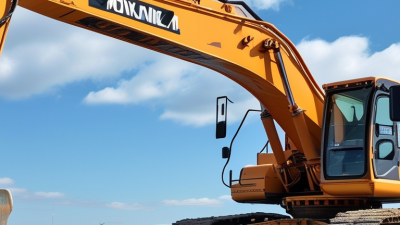
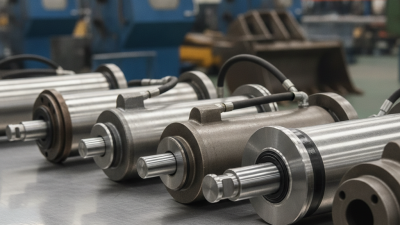
Picking the best Small Excavator Cylindersupplier in China? Well, that’s a bit more complicated than just chasing the lowest price or swooning over pretty product photos. You really need to look for someone who gets the ins and outs—things like load cycles, Hydraulic Pressure, sealing materials, rod finishes, and how they handle the tough conditions on construction sites. Think about it: a small cylinder isn’t just sitting pretty in the shop; it faces mud, vibrations, sudden shocks, and thousands of extension cycles every month. So yeah, details matter here.
Dr. Li Wei, a hydraulic systems engineer with hands-on experience working on compact equipment, puts it simply: “A cylinder’s worth isn’t based on how shiny or new it looks at first—it’s about how long it lasts under normal working conditions.” That’s a statement worth paying attention to. A good manufacturer should be transparent—sharing detailed drawings, info on materials, pressure-test reports, and traceable quality procedures. They should also be able to tell you how their Small Excavator Cylinder performs in cold starts, dusty environments, or uneven digging jobs. The answers to these questions tell you more than a glossy brochure ever could.
This guide is all about helping you evaluate Chinese suppliers with practical and technical criteria in mind. It looks at manufacturing capacity, machining precision, welding quality, seal choices, customization options, delivery reliability, and after-sales support. Companies like Hengli Hydraulics, Yantai Chuangyuan, and other well-established names all have their own strengths—so it's worth digging a little deeper. Honestly, no supplier should be taken at face value without doing your homework. Even the most professional factory can have inconsistent results if their inspection systems aren’t up to par.
Let’s be real—there’s no one perfect supplier out there. A cylinder that works like a champ on one excavator might not perform the same way on another. Factors like bore size, stroke length, mounting style, oil cleanliness, and operating pressure all need to match your specific machine. So, instead of just trusting catalog claims, make sure to compare actual test data. And keep in mind, supplier info can change over time, so it’s smart to verify things periodically. That cautious approach isn’t a sign of weakness—it’s just responsible purchasing in action.
What Defines a Reliable Small Excavator Cylinder Supplier in China?
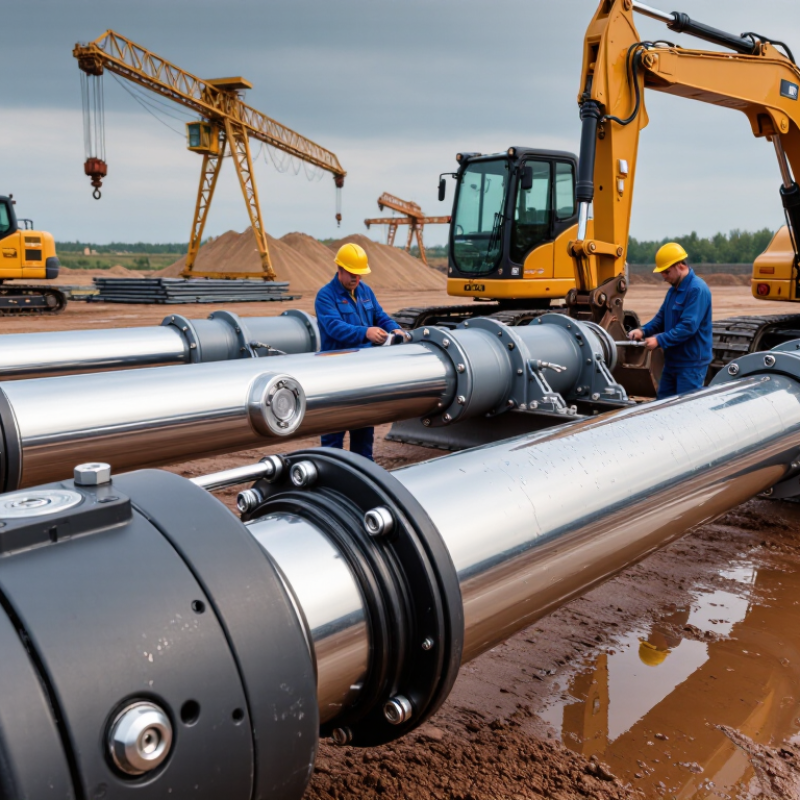
A reliable small excavator cylinder supplier in China should understand field conditions, not only production drawings. Real experience appears in practical details: uneven ground, sudden loads, muddy jobsites, and limited maintenance space. The supplier should recommend suitable bore sizes, rod diameters, seal materials, and mounting dimensions for each excavator application.
Material traceability matters. Each Small Hydraulic Cylinder should have identifiable steel records, machining checks, and weld inspections. A dependable factory also performs pressure testing before shipment. Inspectors should check leakage, rod straightness, surface finish, and stroke accuracy. Test reports should be clear and linked to the actual production batch, not copied from old files.
Communication reveals another important difference. Technical staff should review drawings carefully and ask about working pressure, temperature, cycle frequency, and attachment weight. They should explain limitations instead of promising everything. That builds trust.
Small errors can become expensive downtime. A two-millimeter mismatch may delay installation. Weak packaging can damage a polished rod during transport. Reliable suppliers use protective sleeves, sealed ports, and clear labels. They also provide installation guidance and replacement seal information.
No supplier gets every detail right. A thoughtful manufacturer records complaints, investigates failures, and improves its process. This response is more valuable than a perfect sales promise. Before ordering, buyers should request samples, inspection records, dimensional drawings, and realistic delivery terms. A serious supplier welcomes those questions.
Small Excavator Cylinder Types and Their Common Applications
China Best Small Excavator Cylinder Supplier?
Small Excavator Cylinder Types and Their Common Applications
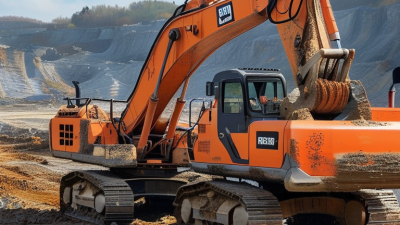
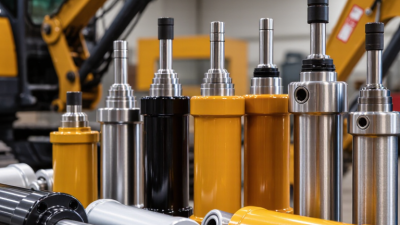
Small excavators rely on several Hydraulic Cylinder types. TheBoom Cylinder controls lifting and lowering. The arm cylinder adjusts digging reach and breakout movement. The bucket cylinder manages loading, grading, and precise soil release. Swing cylinders appear in selected compact designs, though not every machine uses them. Each cylinder must match operating pressure, stroke length, mounting space, and rod diameter.
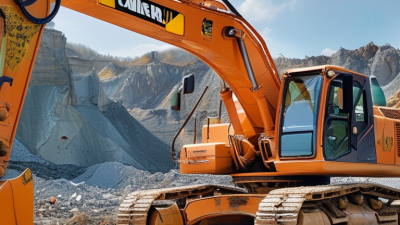
According to Grand View Research, the global excavator market was valued at about USD 63.5 billion in 2023. The report also forecasts growth near 4.8% annually through 2030. Compact excavators support this expansion because they work in gardens, utility trenches, farm buildings, and narrow urban sites. A 1.5-ton machine may use a short boom cylinder for landscaping, while a 6-ton unit needs stronger cylinders for rock, drainage, and foundation work.
Application changes the cylinder specification. Demolition requires reinforced rods and effective sealing against dust. Agricultural work often needs corrosion-resistant surfaces and dependable low-temperature performance. Field inspections frequently find damage caused by misalignment, not weak steel. That detail is easy to miss. Supplier evaluation should include pressure testing, surface hardness records, seal material data, and traceable inspection reports. ISO 9001-based production controls help, but paperwork alone cannot replace practical testing. Small cylinders look simple. They are not.
Key Materials and Manufacturing Processes for Hydraulic Cylinders
China Best Small Excavator Cylinder Supplier?
Key Materials and Manufacturing Processes for Hydraulic Cylinders
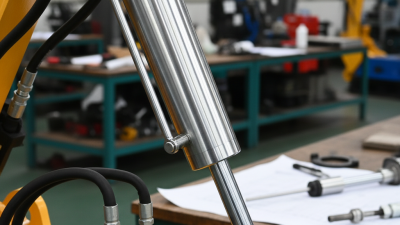
A reliable small excavator cylinder starts with carefully selected materials. The barrel usually uses seamless steel tubing with stable wall thickness. Its inner surface is honed to reduce friction and protect the seals. The piston rod commonly uses medium-carbon alloy steel, followed by heat treatment and hard chrome plating. This combination improves strength, wear resistance, and corrosion protection.
The piston and gland need accurate machining. Even a small dimensional error can cause leakage or uneven movement. For a Hydraulic Cylinder Piston Small assembly, engineers should check piston clearance, rod straightness, and seal groove depth. Polyurethane or reinforced composite seals suit many compact excavators, but the working temperature and hydraulic fluid must guide the choice. Material selection is never universal.
Manufacturing quality depends on more than machining. Welds should receive visual inspection and, where needed, non-destructive testing. Each cylinder should undergo pressure testing above its rated working pressure under controlled conditions. Clean assembly is essential because one metal particle can damage a seal. Traceable records should cover steel batches, heat treatment, plating thickness, and test results.
Field experience still exposes weaknesses. A polished rod may look excellent but fail early if its coating is too thin. Some inspections also miss contamination inside the barrel. Suppliers should review failed cylinders, not hide them. That habit builds practical expertise and more dependable compact excavator cylinders.
How to Assess Quality, Testing, and Certification Standards
China Best Small Excavator Cylinder Supplier?
How to Assess Quality, Testing, and Certification Standards
Choosing a small excavator cylinder supplier requires more than comparing prices. Inspect the steel grade, machining accuracy, seal quality, and surface finish. The rod should feel smooth, without visible pits, scratches, or uneven chrome plating. Check whether welding areas show consistent penetration and clean edges. Small defects can become serious leaks under repeated pressure.
Ask for measurable test records, not general promises. A reliable supplier should provide pressure testing, leakage testing, dimensional inspection, and hardness results. Request the test pressure, holding time, equipment details, and acceptance limits. Confirm that each report matches the actual cylinder batch. Serial numbers, inspection dates, and signatures improve traceability. No inspection method is perfect. That deserves attention.
Certification also needs careful review. An ISO 9001 certificate may show a quality system, but it does not prove every cylinder is excellent. Check the certificate scope, validity, issuing body, and production location. Review material certificates and calibration records for gauges and testing machines. During a factory visit, observe assembly cleanliness, storage conditions, and final inspection practices. I have found that a tidy workshop can still have weak documentation. Ask difficult questions. Then compare answers with physical evidence and independent testing. A small sample inspection before shipment can reveal problems that photographs never show.
China Small Excavator Hydraulic Cylinder Supplier Assessment
The chart shows commonly standardized nominal hydraulic pressure classes used when defining cylinder specifications. During supplier evaluation, compare the proposed working pressure with the cylinder design, seal selection, material certificates, dimensional inspection, pressure testing, and documented acceptance procedures. ISO 10100 provides guidance for hydraulic cylinder acceptance testing, while ISO 9001 certification concerns the supplier’s quality management system rather than proving the performance of a specific cylinder.
Reference context: ISO 2944 nominal pressure classes and ISO 10100 hydraulic cylinder acceptance testing.
Customization Options for Different Excavator Models
China Best Small Excavator Cylinder Supplier?
Small excavators work in narrow spaces, but their hydraulic cylinders face demanding loads. Customization must follow each model’s geometry, working pressure, and attachment weight. Technicians should measure bore diameter, rod diameter, stroke length, pin diameter, and mounting width. These dimensions prevent costly installation problems. The Excavator Oil Cylinder Bucket Cylinder may also require different seals for temperature, dust, and hydraulic oil conditions. A reliable supplier should provide inspection records, pressure testing, and material details for every customized unit.
Customization can include clevis positions, port locations, rod coatings, and cylinder length. Bucket cylinders often need stronger rods because digging creates sudden impact loads. Arm and boom cylinders may require different stroke speeds and mounting angles. Small measurement errors can cause binding or uneven bucket movement. It happens more often than expected. Engineers should compare drawings with the actual machine, not rely only on model descriptions. This extra check improves fit and reduces field adjustments.
Tips: Confirm the machine’s serial details before ordering. Measure both mounting pins, including wear. Request a dimensional drawing for approval. Check seal compatibility with the existing hydraulic fluid. Keep photographs of the original cylinder for reference. A near match is not enough. Even experienced teams sometimes overlook hose clearance near the rod end. That detail deserves a second inspection.
China Best Small Excavator Cylinder Supplier? - Customization Options for Different Excavator Models
Typical reference specifications for small excavator hydraulic cylinders. Final dimensions should be verified against the excavator's original cylinder, hydraulic system, and pin geometry.
| Excavator Operating Class | Typical Application | Typical Bore Diameter | Typical Rod Diameter | Typical Stroke Range | Typical Working Pressure | Common Mounting Configuration | Customization Options | Recommended Cylinder Features |
| 0.8–1.5 tonnes | Boom, arm, or bucket cylinder for compact mini excavators | 40–50 mm | 25–32 mm | 180–350 mm | 16–21 MPa | Clevis or welded eye mounts; compact pin connections | Custom stroke, pin-hole diameter, center-to-center length, port position, and hose connection | Low-friction seals, compact barrel design, corrosion-resistant rod surface |
| 1.5–2.5 tonnes | Bucket, arm, or blade cylinder for small construction excavators | 45–60 mm | 28–38 mm | 220–450 mm | 18–21 MPa | Double-pin clevis, spherical bushing, or welded mounting eye | Customized rod length, retracted length, mounting width, bushing type, and hydraulic ports | Induction-hardened or chrome-plated rod, replaceable bushings, dust-resistant seals |
| 2.5–3.5 tonnes | Boom and arm cylinders for compact excavators used in landscaping and utility work | 55–70 mm | 35–45 mm | 300–550 mm | 20–25 MPa | Clevis-to-eye or eye-to-eye mounting with hardened pins | Custom flange, pin spacing, grease-channel layout, stroke, and cylinder orientation | High-load guide rings, abrasion-resistant seals, reinforced piston and gland assembly |
| 3.5–5 tonnes | Arm, bucket, blade, or offset-boom cylinder | 60–80 mm | 40–50 mm | 350–650 mm | 21–25 MPa | Welded eye, clevis, or spherical-bearing mounting | Customized bore, rod diameter, stroke, port size, mounting angle, and end-fitting geometry | Heavy-duty rod coating, high-strength piston nut, wear-resistant guide rings |
| 5–8 tonnes | Boom, arm, bucket, dozer blade, or auxiliary attachment cylinder | 70–100 mm | 45–60 mm | 450–800 mm | 21–28 MPa | Heavy-duty clevis or eye mounting with replaceable bushings | Custom cylinder length, cushioning arrangement, rod extension, port orientation, and mounting hardware | High-pressure seal package, hardened rod, robust gland, and optional end-of-stroke cushioning |
| Custom Compact Model | Non-standard boom, arm, bucket, blade, thumb, or hydraulic attachment application | Specified by required force and system pressure | Specified by buckling load and stroke length | Specified by attachment kinematics | Matched to the excavator hydraulic circuit | Designed from drawings, samples, or measured mounting points | OEM-equivalent dimensions, custom materials, seal compounds, coating, ports, sensors, and cushioning | Engineering validation required for load, stability, pressure, speed, and fatigue performance |
Comparing Prices, Lead Times, and Export Services
China Best Small Excavator Cylinder Supplier?
When comparing Chinese small excavator cylinder suppliers, unit price is only the starting point. A lower quote may exclude seals, protective packaging, testing, or inland delivery. Ask for a complete cost sheet. It should show material grade, bore size, rod diameter, surface treatment, and payment terms. For a Bucket Stick Cylinder For Excavator Cylinder, small specification changes can affect both price and digging performance. Request drawings before approval.
Lead time needs practical checking. Standard cylinders may ship within two to four weeks, while custom mounting points can require longer production. Ask whether the supplier carries tubes, rods, and seal kits in stock. A reliable factory should explain machining, welding, pressure testing, and inspection stages. Photos help, but test records are stronger evidence. I have seen attractive schedules fail because one sealing component was delayed.
Export service also affects the real purchase cost. Confirm packing dimensions, shipping terms, customs documents, and spare-part support before placing an order. The supplier should provide commercial invoices, packing lists, and accurate product descriptions. Check how damage claims are handled during transport. Communication matters here. Fast replies are useful, but clear replies matter more. Some buyers focus too heavily on the cheapest offer. That choice can create extra downtime, and I would reconsider it after comparing the delivered cost and warranty response.
A Practical Checklist for Selecting the Right Chinese Supplier
China Best Small Excavator Cylinder Supplier?
A Practical Checklist for Selecting the Right Chinese Supplier
Selecting the best small excavator cylinder supplier requires more than comparing prices. Check whether the factory understands your cylinder drawings, pressure requirements, mounting dimensions, and working environment. Ask for material certificates, process records, and recent inspection reports. Reliable suppliers should explain sealing choices clearly, not hide behind general claims. Request sample cylinders before placing a large order. Inspect rod surface finish, weld quality, chrome thickness, and leakage performance. A practical factory should also provide traceable batch numbers and stable production schedules.
Tips: Visit the workshop by video or in person. Look for clean assembly areas, calibrated testing equipment, and workers following written procedures. Ask how rejected parts are separated. Request a small trial order. It may cost more initially, but it exposes weak quality controls early.
Communication is another serious checkpoint. Confirm drawings, tolerances, packaging, warranty terms, and replacement procedures in writing. Ask who handles technical changes after production begins. A capable supplier will discuss risks instead of promising everything. Their answer may be slower, but usually more useful. I would not rely on one successful sample alone. Quality can drift between batches, especially when subcontracted machining is involved. Check repeatability through inspections, documented tests, and consistent feedback. Supplier selection is imperfect, and your checklist may need revision after the first shipment.
FAQS
A reliable supplier understands muddy sites, uneven ground, sudden loads, and limited repair space. Practical experience matters.
The barrel commonly uses seamless steel tubing with a stable wall thickness. The piston rod often uses heat-treated alloy steel. Hard chrome plating helps resist wear and corrosion.
Honing creates a smoother inner surface. It reduces friction and protects seals during repeated movement. A rough barrel may cause early leakage.
Ask for steel batch records, machining checks, heat-treatment details, and plating measurements. Test reports should match the actual production batch.
Inspectors should check leakage, rod straightness, surface finish, welds, and stroke accuracy. Pressure testing should occur before shipment.
Seal selection depends on hydraulic fluid, operating temperature, pressure, and cycle frequency. Polyurethane seals suit many applications, but not every working condition.
Request a sample, dimensional drawing, inspection records, and realistic delivery terms. Check the rod surface, weld quality, ports, and mounting dimensions.
Not always. Quality can drift between batches, especially when machining is subcontracted. A trial order reveals weaknesses earlier, though it cannot expose everything.
Protective sleeves should cover polished rods. Ports should be sealed, and labels should remain clear. Weak packaging can cause damage before installation.
The supplier should record complaints, investigate causes, and improve its process. No factory gets every detail right. Honest correction matters more than perfect promises.
Conclusion
Choosing a reliable Small Excavator Cylinder supplier in China requires more than comparing quotations. A dependable supplier should offer a broad range of cylinder types for boom, arm, bucket, and other hydraulic applications, while using suitable materials, precision machining, heat treatment, and advanced sealing technology. Buyers should also review production capabilities, inspection procedures, pressure testing, dimensional accuracy, and relevant quality certifications to ensure consistent performance and durability.
A strong supplier should provide customization for different excavator models, including dimensions, mounting points, stroke length, coating, and hydraulic specifications. Price should be evaluated together with lead time, minimum order quantity, packaging, communication, and export support. Before placing an order, confirm drawings, material details, testing reports, warranty terms, spare-part availability, and after-sales service. This practical checklist helps buyers select a capable Chinese supplier that can deliver safe, efficient, and dependable hydraulic cylinders for various working conditions.